How Often Should You Get a Wheel Alignment?


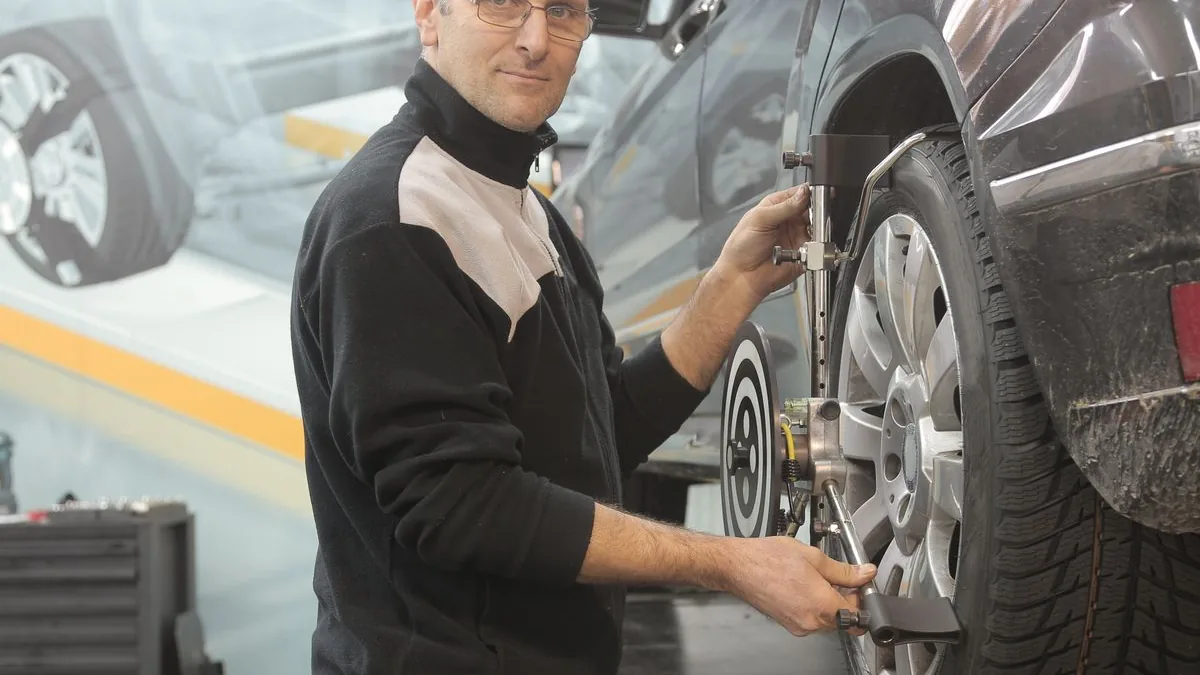
Have your wheel alignment checked once a year, or roughly every 10,000 miles, whichever comes first — the RAC advises every one to two years. Treat it as routine, low-cost maintenance, much like an oil change. That baseline shortens if you drive London's pothole-heavy roads, hit a kerb, or fit new tyres. Alignment quietly protects your tyres, your fuel bill and your safety, yet it rarely makes anyone's to-do list until the steering sits crooked or the car starts pulling — by which point the tyre wear has usually already begun.
Key takeaways
- Have your alignment checked roughly once a year, or every one to two years and around 10,000 miles as a baseline.
- Always check alignment when fitting new tyres, and after hitting a pothole or kerb.
- Pulling, uneven tyre wear and an off-centre steering wheel mean you should book sooner rather than later.
- London's potholed roads and tight kerbs mean city drivers often need checks more frequently than the annual minimum.
How often should you get a wheel alignment as a general rule?
As a sensible baseline, have your wheel alignment checked once a year, or every one to two years and roughly every 10,000 miles, whichever comes first. The RAC's wheel alignment cost guide advises that a car should have a wheel alignment every one to two years. Treat it as routine, low-cost maintenance, much like an oil change.
A yearly check catches small misalignments before they wear your tyres unevenly or blunt your steering. If you cover high mileage, tow regularly or drive on rough urban roads, check more often than the annual minimum. The RAC notes UK drivers can expect to pay around £90 to have their front and rear wheels realigned, which is modest set against the cost of premature tyre replacement.
What knocks your wheels out of alignment?
Alignment usually drifts gradually, but sudden impacts cause most problems. Potholes, kerbs, speed bumps taken too fast and minor collisions all jolt suspension and steering components out of their set angles. Even a single hard knock can skew your tracking, so after any of these it is worth a quick check, especially if the car feels different afterwards.
Potholes are the biggest single culprit on UK roads, and the problem is getting worse. In 2025 the RAC attended 26,048 pothole-related breakdowns, the equivalent of 71 every single day and a 15% rise on the previous year (RAC: pothole breakdowns in 2025). Many of those jolts also nudge wheels out of line without causing an obvious breakdown.
Everyday hazards that cause misalignment
The usual culprits are easy to recognise once you know them. Watch out for these common causes:
- Hitting a pothole at speed or clipping a deep drain cover
- Scuffing or bumping a kerb while parking
- Driving over debris or crossing a high speed bump too quickly
- General wear to suspension parts, bushes and ball joints over time
- Carrying heavy loads regularly, which alters ride height and angles
What are the signs you need a wheel alignment sooner?
Your car will usually tell you when something is wrong, so it pays to listen. The clearest sign is the vehicle pulling to one side on a straight, level road. Other red flags include a steering wheel that sits off-centre, uneven or rapid tyre wear, and steering that feels loose or vague. Act promptly.
If you notice any of these between scheduled checks, don't wait for your annual service. Misalignment only gets worse and more expensive the longer it is left, because the tyres keep scrubbing against the road at the wrong angle. Left unchecked, that uneven wear can eat into the tread until an edge drops below the UK legal minimum of 1.6mm, leaving the tyre illegal and unsafe long before it should have worn out. A short inspection now can save you the price of a full set of tyres later.
How to spot uneven tyre wear
Run your hand across the tread now and then. If the inner or outer edge is noticeably more worn than the rest, that is a classic alignment symptom. Feathering, where the tread feels smooth one way and sharp the other, is another telltale sign well worth checking without delay.
Do you need an alignment with new tyres?
Yes. Fitting new tyres is one of the best moments to have your alignment checked, because driving on misaligned wheels can chew through fresh tread far faster than normal. Setting the angles correctly from day one protects your investment and means the rubber wears evenly across its full life, saving you money.
The numbers back this up. According to TyreSafe's wheel alignment guide, misalignment can cut a tyre's life by up to 25%, and it recommends an alignment check roughly every 10,000 miles or at least once a year. Whenever you replace a pair or a full set of tyres, ask for an alignment check at the same time.
How does driving in London affect alignment frequency?
London's roads are notoriously hard on suspension and steering. Frequent potholes, raised kerbs, tight parking spaces and endless speed bumps knock wheels out of line far more often than gentler rural routes. If you drive regularly around the capital, the standard annual check may not be enough to keep your tracking accurate.
The pothole toll is real money as well as inconvenience. The RAC estimates pothole damage costs a typical family car up to £590 for anything worse than a puncture (RAC: pothole repair costs). Around Park Royal and the busy A40 corridor, we'd suggest having alignment looked at every six months, or any time you feel a heavy jolt.
Why precision matters on busy roads
Accurate alignment keeps your steering predictable in stop-start traffic and helps the car respond cleanly when you need to react quickly. Our Hawk Eye wheel alignment uses Hunter's HD cameras to measure every angle precisely, and Hunter four-wheel alignment corrects even small deviations before they become a problem. We cover drivers right across our West and North West London service areas.
What does ignoring wheel alignment cost you?
Putting off an alignment check rarely saves money. Misaligned wheels scrub the road at the wrong angle, wearing tyres unevenly and shortening their lifespan considerably, which means buying replacements sooner than you should. Poor alignment also adds rolling resistance that can nudge fuel consumption up, and it makes the car harder to control.
Set the small cost of a check against the alternative. You risk losing much of that potential 12,000 miles of extra tyre life, paying for premature rubber, and burning more fuel every mile in between. A quick alignment is one of the cheapest ways to protect both your safety and your running costs, so it makes sense to keep it on your maintenance calendar.
Further reading: How Wheel Alignment Saves You Money on Tyres and Fuel and Two-Wheel vs Four-Wheel Alignment: Which Do You Need?.
Frequently asked questions
How long does a wheel alignment take?
A standard alignment check and adjustment usually takes around 30 to 60 minutes, depending on your vehicle and how far out the angles are. Modern camera and laser systems work quickly, so you are rarely waiting long. If extensive adjustment or a seized component is involved, it may take a little more time.
Can I check my own wheel alignment at home?
You can spot the warning signs yourself, such as pulling, an off-centre steering wheel or uneven tyre wear. However, measuring and correcting the actual angles needs specialist equipment. A proper alignment relies on precise camera or laser readings that simply cannot be achieved accurately with DIY methods at home.
Is wheel alignment the same as wheel balancing?
No, they are two different jobs. Alignment adjusts the angles of your wheels so they point correctly relative to the road and each other. Balancing corrects the weight distribution around the wheel and tyre to stop vibration. Both matter, and they are often carried out together during a tyre fitting.
Will alignment fix a steering wheel that is off-centre?
In most cases, yes. An off-centre steering wheel when driving straight is a common symptom of misalignment, and a proper adjustment usually corrects it. If the problem persists afterwards, there may be a separate steering or suspension fault worth investigating before you drive many more miles.
How often should I check alignment if I drive in London?
For regular city driving we suggest every six months rather than annually, plus a check after any heavy pothole or kerb strike. London's potholes and tight streets knock wheels out of line more often, so more frequent checks protect your tyres and keep your steering safe and predictable.
If your car is pulling, your tyres are wearing unevenly, or it has simply been a while since your last check, book a wheel alignment with Park Royal Tyre & Alignment Centre in Park Royal, London NW10 7TR. Call 020 3886 2355, message us on WhatsApp at 07476 586 589, or get in touch here to arrange a convenient time.
Wheel Alignment near you
Prefer to get this sorted locally? Park Royal Tyre & Alignment Centre looks after drivers right across West and North-West London:
Same-Day Tyre Fitting & Walk-Ins Welcome
New tyres fitted from £35 while you wait, plus puncture repairs, wheel balancing and battery replacement at our Park Royal workshop. No appointment needed for tyres, just call in.