Warning Signs Your Suspension Needs Repair (2026 Guide)
Your suspension keeps your tyres in contact with the road, here are the warning signs you should never ignore.


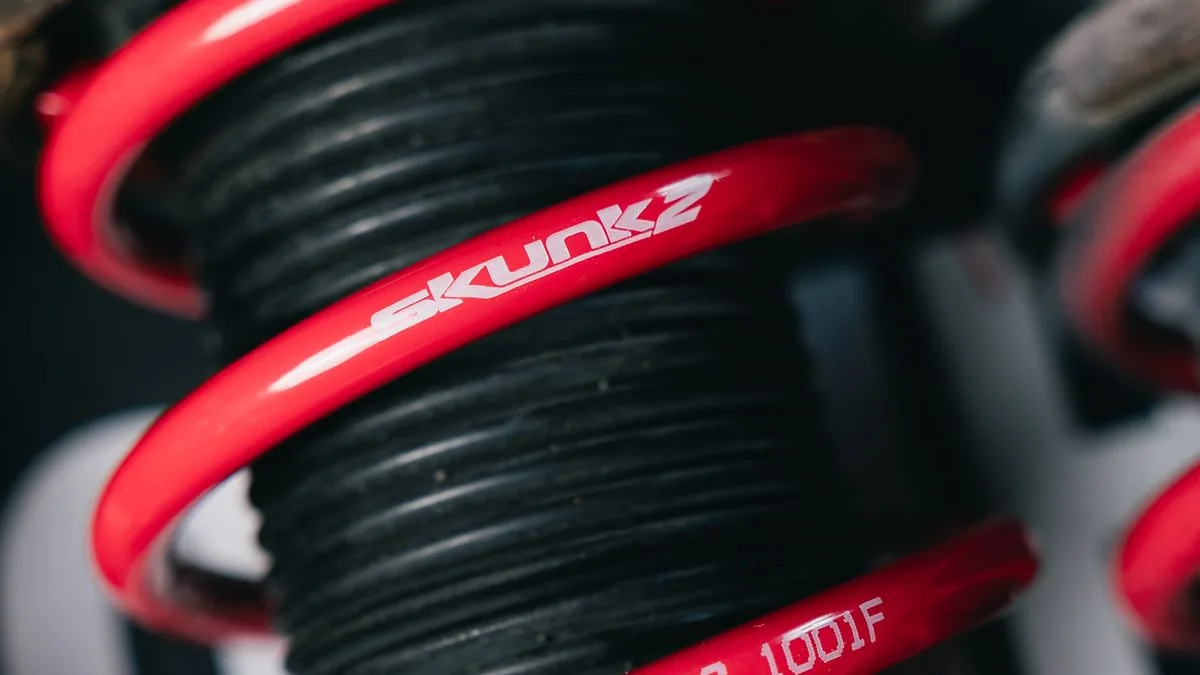
The clearest warning signs your suspension needs repair are knocking or clunking over bumps, a bouncy or crashy ride, the car nose-diving under braking, uneven or cupped tyre wear, pulling or drifting to one side, the car sitting unevenly, and oil leaking from a shock. Any one of these means it is time for an inspection.
What are the most common warning signs of suspension wear?
The most common warning signs are noise and movement you can feel from the driver's seat. Listen for a clunk or knock over potholes, a soft or wallowing ride, the front dipping sharply under braking, a crashy jolt over speed bumps, and steering that no longer feels planted. These usually creep in gradually, which is why so many drivers miss them.
Worn suspension components rarely fail overnight. They wear slowly, so the change in ride quality sneaks up on you. Watch and listen for these signs:
- Knocking or clunking noises when driving over speed bumps, potholes or uneven roads.
- A bouncy, floaty or "boat-like" ride that feels disconnected from the road.
- A harsh, crashy feeling over small bumps that used to be soaked up smoothly.
- The nose of the car diving forward sharply when you brake.
- The rear squatting low when you accelerate or load the boot.
- The car visibly sitting lower or unevenly on one corner when parked.
- Steering that feels vague, wandering or pulls to one side on a straight road.
- Visible oil or fluid running down the body of a shock absorber or strut.
If you spot fluid on a shock, that component is almost certainly past its best. Our suspension repair team can confirm what has worn and what is still serviceable.
Which parts actually wear out in a suspension?
Your suspension is a system, not a single part. The main wear items are the shock absorbers (dampers) and struts, the coil or leaf springs, and the rubber bushes and mounts that locate everything. Ball joints, anti-roll bar links and top mounts sit alongside them, and any one can produce the noises and poor ride you notice.
Understanding what each part does makes the symptoms easier to place:
- Shocks and struts: damp the springs so the body settles quickly after a bump. When they weaken, the car floats, bounces and crashes.
- Springs: carry the car's weight and absorb the initial impact. A cracked or broken spring makes the car sit low on one corner and clunk.
- Bushes and mounts: the rubber joints that cushion movement. Perished bushes let parts knock against each other, producing that tell-tale clunk over bumps.
Because these parts share the load, one worn item quietly stresses the others. A tired shock lets the spring and bushes work harder, so a small job left alone often grows into a larger one.
How do London potholes wreck suspension?
A pothole delivers a sudden, sharp impact that your suspension was never designed to absorb repeatedly. The jolt can crack a coil spring, blow the seal on a shock absorber, split a bush, or knock a wheel out of alignment. Hit one hard enough and you can buckle the wheel rim itself in a single strike.
The scale of the problem is not anecdotal. The latest ALARM survey put the road repair backlog across England and Wales at £18.62bn (Asphalt Industry Alliance: ALARM survey), a shortfall that would take an estimated 12 years to clear even though 1.9 million potholes were filled at a cost of £149.3m in the year. That is the road network Park Royal drivers use every day.
The damage shows up in breakdown data too. In the first three months of 2025 alone, RAC patrols attended 9,439 pothole-related breakdowns (RAC: pothole breakdowns in early 2025) for faults such as damaged shock absorbers, broken suspension springs and distorted wheels, more than double the previous quarter. Across a full year the RAC logs tens of thousands of these call-outs on its (RAC Pothole Index) Pothole Index. The busy roads around Park Royal and the North Circular take a steady toll on shocks, springs and bushes.
How does the bounce test work?
The bounce test is a quick, hands-on check you can do yourself in seconds. Push down firmly on one corner of the car over the wheel, then let go. Healthy suspension settles after a single rebound. If the corner keeps bouncing two or three times before it stops, the shock absorber on that wheel is likely worn.
It is a rough guide rather than a diagnosis, but it is genuinely useful. A shock absorber's whole job is to damp the spring's energy. When that damping fades, the body keeps oscillating after every bump, which is exactly what the bounce test reveals.
What the bounce test cannot tell you
The bounce test will not reveal worn bushes, tired ball joints, or a slightly bent component. Those need the car raised on a ramp and each joint checked for play by hand. Treat a failed bounce test as a prompt to book a proper inspection, not the final word on what needs doing.
How does worn suspension affect your tyres and alignment?
Worn suspension and uneven tyre wear go hand in hand. When shocks, springs or bushes are tired, the tyre can no longer keep firm, even contact with the road. The result is patchy wear such as cupping, scalloping or feathering, plus a wheel alignment that quietly drifts out of specification and pulls the car off line.
Here is the chain of events. Loose or worn components let the wheel sit at the wrong angle. That changes the camber and toe settings, so the tyre scrubs across the tarmac instead of rolling cleanly. You end up replacing tyres far sooner than you should, and the car may drift or pull to one side.
Because of that link, it makes sense to pair any suspension work with a precision alignment check. We use Hunter Hawk Eye camera equipment for our wheel alignment so the geometry is set accurately once worn parts are replaced. Fitting fresh shocks without correcting alignment simply wears the next set of tyres unevenly too.
Wear patterns worth knowing
- Cupping or scalloping: scooped dips spaced around the tyre, often pointing to worn shocks.
- Feathering: tread blocks smooth on one side and sharp on the other, usually a toe problem.
- One-sided wear: the inner or outer shoulder wearing faster, typically a camber issue.
What do we check during a suspension inspection?
A thorough suspension inspection covers far more than the shock absorbers. With the car safely raised, we check shocks and struts, springs, top mounts, anti-roll bar links, bushes, ball joints and track rod ends. Each is inspected for play, leaks, cracks and corrosion, then compared against its opposite number on the other side.
This is where experience matters. A faint knock can come from a worn drop link, a perished bush or a loose joint, and they all sound similar from the cabin. Checking each component by hand isolates the real cause rather than guessing. Our typical checks include:
- Shock and strut condition, looking for leaks and weak damping.
- Coil spring integrity, since broken springs are common on pothole-scarred UK roads.
- Bushes and mounts for splits, perishing and excess movement.
- Ball joints and track rod ends for play that affects steering and alignment.
It is worth knowing where the MOT stands here. Under the DVSA rules, a shock absorber is a fail if it shows a negligible damping effect, though a light film of seepage on its own is not a reason for rejection (MOT inspection manual: wheels, tyres and suspension). In other words, an MOT can pass a shock that is well on its way out, so do not wait for a test to flag it.
When should you act on suspension problems?
You should act as soon as you notice a persistent noise, a change in ride quality, or fresh uneven tyre wear. A worn shock will not fix itself, and driving on it lengthens braking distances, reduces grip in corners, and accelerates wear on tyres and neighbouring parts. Early action is nearly always cheaper and safer.
Suspension faults, fluid leaks and excessive play only worsen over time, so sorting them early keeps your car safe and avoids a bigger bill. If anything feels different about how your car rides or steers, get it looked at promptly rather than waiting for it to deteriorate.
Further reading: Air Conditioning Regas: When and Why Your Car Needs One and How Wheel Alignment Saves You Money on Tyres and Fuel.
Frequently asked questions
Can I drive with worn suspension?
You can usually still drive, but you should not ignore it for long. Worn shocks reduce grip, extend braking distances and make the car less stable in corners and crosswinds. They also wear your tyres unevenly. Treat it as a safety issue and book an inspection soon rather than putting it off.
How long do shock absorbers last?
There is no fixed figure, as it depends on mileage, road quality and driving style. Many shocks last well beyond 50,000 miles, while rough, pothole-heavy roads and heavy loads shorten that. Rather than relying on age alone, judge by symptoms: bouncing, leaks, clunks or a noticeable drop in ride comfort.
Does worn suspension cause uneven tyre wear?
Yes. When suspension parts wear, the wheel can no longer hold its correct angle, so the tyre scrubs and wears unevenly. You may see cupping, feathering or one-sided wear. That is why a suspension check and a wheel alignment check belong together for the best tyre life and safest handling.
Will new tyres fix a bouncy ride?
No. New tyres improve grip and smoothness, but they cannot restore damping. If the ride feels bouncy, floaty or crashy, the cause is almost always worn shocks or struts, not the tyres. Replace the worn components, then set the alignment so the fresh tyres wear evenly.
Can a pothole really break my suspension?
Yes. A hard pothole strike can crack a spring, blow a shock seal, split a bush or buckle a wheel in one hit. It is a leading cause of suspension breakdowns on London roads, and the damage is often invisible from the driver's seat, so a proper inspection is the only way to be sure.
If you have noticed any of these warning signs, do not leave it to chance. Call Park Royal Tyre & Alignment Centre on 020 3886 2355, message us on WhatsApp at 07476 586 589, or book a suspension and alignment check at our Park Royal workshop. We are RAC and AA approved, offering same-day fitting while you wait, and walk-ins are welcome with no appointment needed.
Suspension Repairs near you
Prefer to get this sorted locally? Park Royal Tyre & Alignment Centre looks after drivers right across West and North-West London:
Same-Day Tyre Fitting & Walk-Ins Welcome
New tyres fitted from £35 while you wait, plus puncture repairs, wheel balancing and battery replacement at our Park Royal workshop. No appointment needed for tyres, just call in.