How to Read Your Tyre Size: A UK Driver's Guide


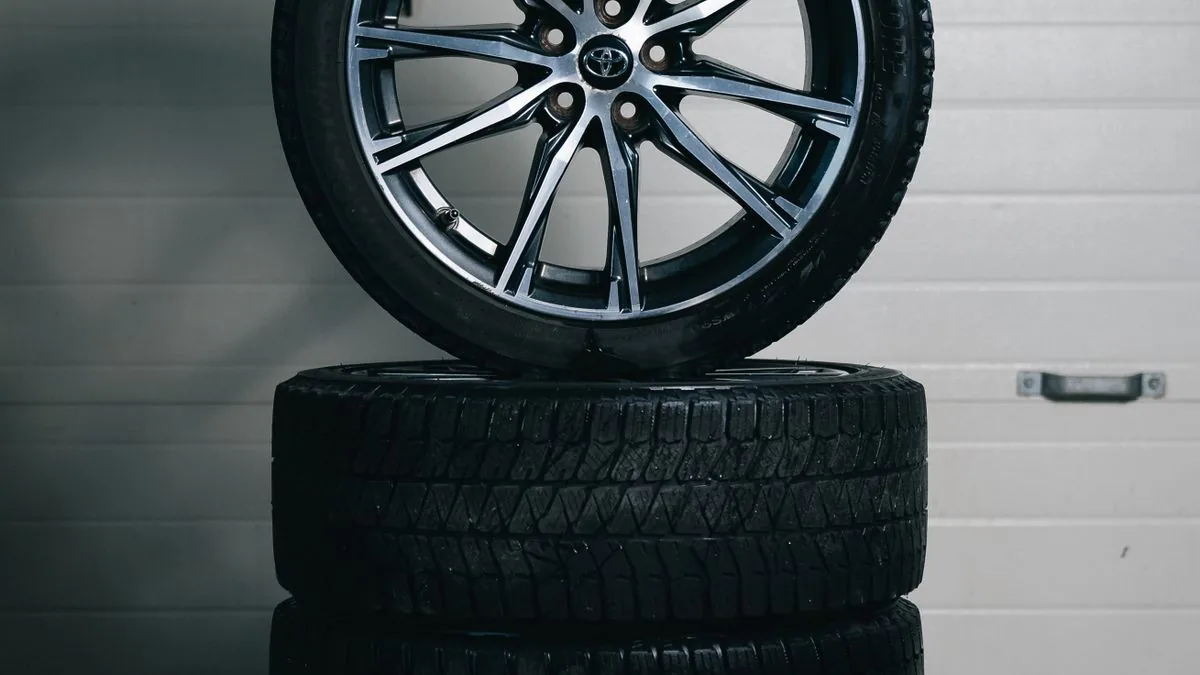
Your tyre size sits in plain sight on the sidewall, written as a code like 205/55 R16 91V. Each block tells you the width in millimetres, the profile, the construction, the wheel diameter, and how much load and speed the tyre can safely handle. Learn to read it once and you will never buy the wrong tyre again.
Where do you find your tyre size?
You find the size moulded into the outer sidewall of every tyre, raised in the rubber so it stays readable even when dirty. Look for a string such as 205/55 R16 91V curving around the edge, sitting among other markings like the brand, the pattern name, and the DOT date code.
The same size normally appears on all four tyres if your car runs a single specification. Give the rubber a quick wipe if road grime hides the digits, and use a torch held at an angle. The lettering is the same colour as the tyre, so it catches shadow rather than light and is far easier to read from the side.
What does each number in the tyre size mean?
Each block in the code describes one physical measurement or rating. Using 205/55 R16 as the example, the tyre is 205mm wide, has a sidewall height that is 55% of that width, uses radial construction, and fits a 16-inch wheel. Read left to right, the figures move from the tread inwards toward the rim.
The RAC breaks the same sequence down using 225/45 R17 91W as its example, confirming that the first number is the width in millimetres, the second is the aspect ratio as a percentage, the "R" indicates radial construction, and the next number is the wheel diameter in inches (RAC: tyre size guide). Every UK tyre follows this standard order.
Section width (205)
The first three digits give the nominal section width in millimetres, measured across the widest part of the tyre wall to wall. A "205" tyre is roughly 205mm wide. Wider tyres usually offer more dry grip and a bigger contact patch, but they can nudge up fuel use, road noise, and steering weight, so the maker chooses a balance for your car.
Aspect ratio, or profile (55)
The two digits after the slash are the aspect ratio, expressed as a percentage. A "55" means the sidewall height equals 55% of the section width. Lower numbers give a shorter, stiffer sidewall with sharper response; higher numbers give a taller, more cushioned profile that soaks up potholes and rough surfaces more comfortably.
Construction and rim diameter (R16)
The "R" confirms radial construction, used on virtually every modern car tyre. The number straight after it, "16", is the wheel rim diameter in inches. This figure must match your wheels exactly: a 16-inch tyre will not seat on a 17-inch rim, and forcing a mismatch is dangerous. Occasionally you may see a "ZR" here on very high-performance tyres.
How do you read the load index and speed rating?
The final number and letter set the tyre's safety ceiling. In 91V, the "91" is the load index and "V" is the speed rating. Load index 91 corresponds to a maximum of 615kg per tyre, and a "V" symbol permits speeds up to 240km/h, which is 149mph, according to Michelin's load and speed charts (Michelin: load and speed ratings).
Load index
The load index is a coded number, not a weight in kilograms. You convert it using a standard reference table where each value maps to a maximum load carried at full inflation. Common car values include 91 (615kg) and 95 (690kg). Fitting a tyre with a lower load index than your vehicle requires risks sidewall failure and can be illegal, so always match or exceed the figure the maker sets.
Speed rating
The speed rating is a single letter showing the maximum speed the tyre is built to sustain when correctly inflated and loaded. On the standard chart, T equals 190km/h (118mph), H equals 210km/h (130mph), V equals 240km/h (149mph), and W equals 270km/h (168mph) (Tyremap: speed ratings explained). Never fit a rating below your manufacturer's recommendation.
Many drivers assume a higher speed rating is always "better". In practice, matching the rating to your car keeps ride comfort and wet braking in balance, because higher-rated tyres often use stiffer compounds and firmer sidewalls that you may never need on normal roads. Going one step up is usually fine; going below the specified letter is not.
Why does matching the exact size matter?
Because your tyre size is engineered around your car, not chosen for looks. The width, profile, and rim diameter together set the rolling circumference, which feeds your speedometer, odometer, gearing, ABS, and stability control. Change one figure and those systems can read the road wrongly, so the safe rule is to fit the size the manufacturer approves.
Size also ties directly into what the law expects of a roadworthy tyre. The Highway Code requires car tyres to have a tread depth of at least 1.6mm across the central three-quarters of the tread and around the whole circumference, and to be correctly inflated to the vehicle maker's specification for the load carried (The Highway Code, annex 6). The right size makes hitting those pressures and wear patterns far easier.
If a sidewall is scuffed, cracked, or bulging as well as worn, the size code is only half the story. Damage can mean the tyre needs inspection or replacement rather than a straight like-for-like swap. Our team can advise on a tyre repair where the damage is within the legal repairable zone, or a new fitting where it is not.
Where else is your tyre size recorded?
Your vehicle records the recommended size in several places, which is handy when the tyres are worn or mismatched. The most reliable sources are the owner's handbook and a placard fitted to the car, both of which show the manufacturer-approved sizes and cold inflation pressures for your exact model and trim level.
Check the driver's door shut, the B-pillar, the inside of the fuel-filler flap, or the glovebox lid for a printed sticker. When customers arrive unsure of their fitment, the door-pillar placard usually settles it within seconds, and it lists the correct pressures too. The handbook adds any winter, spare-wheel, or optional sizes the maker approves for your car.
Not near your car right now? Just send us your registration and we will match the size for you, then confirm what we have in stock. You can also browse our car tyre range by size, or read more about fitting options on our tyres overview page.
What if the sizes on your tyres do not match?
Mismatched sizes are common and always worth investigating. Front and rear tyres can legitimately differ on some performance and rear-wheel-drive cars, a factory setup called a staggered fitment. However, if all four tyres show random sizes for no documented reason, that usually points to past replacements fitted with the wrong specification.
Differences in construction, speed rating, or load index across a single axle can compromise handling and may not be road-legal, since UK rules require tyres on the same axle to be compatible. Radial and cross-ply tyres must never be mixed on one axle. If you are unsure whether your current fitment is correct, have it checked rather than guessing at 70mph.
Still unsure which figures matter for your car? Park Royal Tyre & Alignment Centre is an RAC and AA approved garage in Park Royal, London NW10 7TR, and we are happy to read your sidewall and confirm the right fitment. New tyres start from £35 fitted, with same-day fitting while you wait and walk-ins welcome at our Park Royal workshop, no appointment needed. Call 020 3886 2355, message us on WhatsApp at 07476 586 589, or book your fitting online.
Further reading: The EU Tyre Label Explained: Grip, Fuel and Noise and Tyre Tread Depth: The UK Legal Limit and Why It Matters.
Frequently asked questions
Can I fit a different tyre size to the one listed?
You should only fit a size approved by your vehicle manufacturer. Changing the width, profile, or rim diameter alters the rolling circumference, which can throw out the speedometer, gearing, and safety systems. If you want a plus-size wheel or a winter option, confirm it appears in your handbook or check with a fitter before you buy.
What does the letter before the rim size mean?
The "R" before the rim diameter stands for radial construction, where the casing plies run radially across the tyre. Almost all modern car tyres are radial. You may rarely see a "B" for bias-belted or a "D" for diagonal on older or specialist tyres, but these are uncommon on today's cars and vans.
Is the load index a weight in kilograms?
No, the load index is a coded number that maps to a maximum weight using a standard table. For example, an index of 91 represents 615kg per tyre, while 95 represents 690kg. Always match or exceed the load index your vehicle requires, and never fit a lower one, as it risks overloading and sidewall failure.
What speed does a V or W rating allow?
A "V" rated tyre is built to sustain up to 240km/h (149mph), and a "W" up to 270km/h (168mph), when correctly inflated and loaded. These are engineering limits, not licences to speed. The point is to fit at least the rating your car maker specifies, since a lower letter can be unsafe and non-compliant.
Where is the easiest place to find my tyre size quickly?
The sidewall is fastest, since the full code is moulded onto every tyre. If your tyres are worn or replaced incorrectly, the driver's door-pillar placard or the owner's handbook gives the manufacturer's recommended size. Both also list the correct cold tyre pressures for your specific vehicle, which is worth noting at the same time.
Find your tyre size
Your size is on the sidewall, for example 205/55 R16. Or look it up by car make.
Tyre Fitting near you
Prefer to get this sorted locally? Park Royal Tyre & Alignment Centre looks after drivers right across West and North-West London:
Same-Day Tyre Fitting & Walk-Ins Welcome
New tyres fitted from £35 while you wait, plus puncture repairs, wheel balancing and battery replacement at our Park Royal workshop. No appointment needed for tyres, just call in.