How Wheel Alignment Saves You Money on Tyres and Fuel


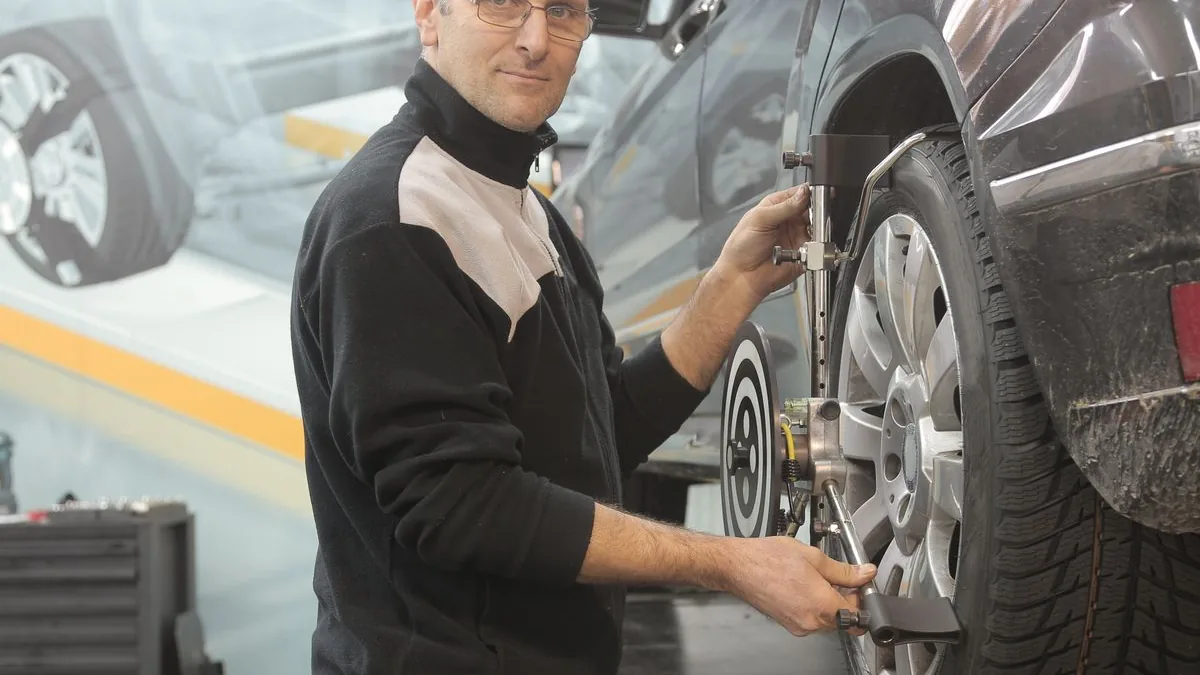
Correct wheel alignment saves money twice: poor alignment can cut a tyre's life by up to 25%, and correcting it can improve fuel efficiency by as much as 10%. When your wheels point in slightly different directions, every mile adds wear, drag and stress you never notice until the bill lands, and an alignment check is one of the cheapest jobs in any workshop. Here is exactly how correctly aligned wheels keep money in your pocket, backed by current UK figures, plus how to spot when yours have drifted out of true.
How much does wheel alignment actually save you?
A lot, relative to what it costs. Correcting misaligned wheels can improve fuel efficiency by as much as 10%, and running with poor alignment can cut a tyre's lifespan by up to 25%, according to TyreSafe's wheel alignment. Those two savings stack on top of each other every single mile you drive.
Put in pounds, that matters. A set of four tyres is one of the biggest routine running costs on a car, whether you buy budget or premium. Losing a quarter of that tread early, while also paying a fuel penalty on every journey, turns a small drift in geometry into a genuinely expensive habit.
How does correct alignment make your tyres last longer?
By spreading wear evenly. When your wheels sit at the correct angles, the tread meets the road flat and the contact patch shares the load across its full width. Misalignment forces one edge or one side to scrub harder than the rest, so that section wears out long before the rest of the tyre is finished.
Toe angle is the biggest culprit. When toe is out, the tyres are not rolling purely forward; they are continuously dragged sideways across the road, scrubbing rubber away with every rotation. That is why misalignment can shorten a tyre's life by up to a quarter. You end up replacing a tyre that still has healthy tread on one shoulder simply because the other edge is legally finished.
Picture a tyre worn bald on its inner edge while the outer tread still looks new. Legally that tyre is done, yet most of its rubber survives unused. You have effectively paid for tread you never got to drive on. Even wear lets you use the whole surface, stretching replacement intervals and cutting your cost-per-mile. If you do need new rubber, our range of tyres in Park Royal covers everyday and performance fitments, with new tyres from £35.
Can wheel alignment really improve fuel economy?
Yes, and the figure is meaningful. Correcting alignment can improve fuel efficiency by as much as 10%. Aligned wheels roll straight ahead with minimal scrubbing, so your engine spends less energy fighting the road. When wheels toe in or out, the tyres are partly dragged sideways on every rotation, and that scuffing creates rolling resistance your engine must overcome.
Scale that against real mileage. The average UK car covered 7,100 miles in 2024, according to the Department for Transport's National Travel Survey. A 10% fuel penalty across thousands of miles is a slice of every tank quietly wasted. Think of misalignment as a soft, permanent brake applied to your car. Releasing it is one of the few maintenance jobs that pays you back at the pump rather than merely preventing a future failure.
The effect is invisible on any single trip but relentless over a year. Every commute, school run and motorway drive carries that hidden drag. A precise reset removes it in one visit, and the same tank simply takes you further from then on.
What does misalignment cost you in suspension and steering repairs?
More than the tyres, potentially. Misalignment does not just punish rubber; it loads the components that hold your wheels in place. When wheels fight the direction of travel, the extra forces feed back through track rods, bushes, wheel bearings and steering joints, all designed to work within fine tolerances they were never meant to exceed.
Over months, that constant strain accelerates wear in expensive assemblies. A worn bush or a tired bearing costs far more than the alignment that could have spared it. Keeping your geometry true lets these parts move as the engineers intended, so they reach their full service life instead of failing early. Drivers who align regularly tend to see far fewer surprise steering and suspension bills.
There is a safety dividend too. Correct alignment keeps your steering predictable and your tyres gripping evenly when you need them most. Uneven tread means uneven grip, which can lengthen stopping distances on wet roads. When every tyre carries its share of the work, you keep maximum contact with the surface in an emergency, so the savings and the safety travel together.
How do you know your wheels are out of alignment?
Your car usually tells you. The classic signs are a steering wheel that sits off-centre on a straight road, a pull to one side, vibration, or tyres wearing faster on one edge than the other. When wheels are misaligned the tyres do not wear evenly, which also raises fuel consumption and blunts handling, as the RAC's guide to uneven tyre wear explains.
Feathering is a giveaway worth learning. Run your hand across the tread and if the ribs feel smooth one way and sharp the other, like a saw's edge, your toe setting has likely drifted. Uneven shoulder wear, where one edge is noticeably lower than the centre or the far shoulder, points the same way. None of these fix themselves, and every mile driven on them deepens the damage.
Crucially, alignment is not checked during an MOT or a standard service, so it is easy to let it slide unnoticed for years. Around Park Royal and the wider West London road network, frequent kerbs, speed humps and pothole-scarred surfaces make drift more common than many drivers expect, which is why a periodic check pays for itself.
When should you book an alignment check?
Book one whenever your car gives you a clue, and at sensible intervals besides. TyreSafe recommends checking alignment every 10,000 miles or at least once a year. Beyond that schedule, certain events make a check worthwhile even without symptoms, because they physically knock your geometry out of specification.
Kerb knocks, deep potholes, fitting new tyres and any suspension work can all shift your settings. If you have clipped a kerb hard on a West London side street or dropped into a pothole on the A40, it is worth having the angles verified rather than assuming they survived. Our Hawk Eye wheel alignment service measures every angle with precision cameras and resets them to the manufacturer's specification, and our Hunter wheel alignment page explains how the rear axle is set as well as the front. Either way you leave with geometry you can trust, and savings that start on the drive home.
As an RAC and AA approved garage in Park Royal, we treat alignment as a routine, affordable safeguard rather than a grudge purchase. A few minutes on the rig today protects the most expensive consumables on your car for thousands of miles to come.
Further reading: Tracking vs Wheel Alignment: Are They the Same Thing? and 6 Signs Your Car Needs a Wheel Alignment.
Frequently asked questions
How often should I check my wheel alignment?
TyreSafe advises a check every 10,000 miles or at least once a year, plus any time you fit new tyres or notice a pull. If you regularly meet rough roads, kerbs or potholes, check more often. Many drivers simply have it inspected at each service, keeping small drifts from becoming costly wear.
Can I tell if my alignment is out without a garage?
Some signs are easy to spot. Look for a steering wheel that will not sit straight, a car that drifts on a level road, or tread wearing unevenly across a tyre. Feathered, sawtooth tread ribs are a strong hint too, though only proper measuring equipment confirms the exact angles involved.
Will alignment fix vibration through the steering wheel?
Sometimes, but vibration often points to wheel balancing rather than alignment, and the two jobs differ. Alignment sets the angles your wheels sit at, while balancing corrects weight distribution around each wheel. A good workshop checks both, so it is worth describing exactly what you feel when you book in.
How much can wheel alignment save me on fuel and tyres?
Correcting alignment can improve fuel efficiency by as much as 10% and prevent up to a 25% reduction in tyre life, according to TyreSafe. Against tyre sets costing £200 to £460 and a fuel penalty on every mile, a single check typically pays for itself many times over.
Is alignment worth it on older or cheaper cars?
Absolutely. The savings on tyres and fuel apply to every car, and older vehicles with worn bushes are often the ones drifting out of true. On a budget car, stretching tyre life and protecting steering parts matters even more, because every avoided repair makes a real difference to running costs.
If your steering feels off, your tyres are wearing unevenly, or it has simply been a while, book a precise alignment check with Park Royal Tyre & Alignment Centre in NW10. Call us on 020 3886 2355, message us on WhatsApp at 07476 586 589, book online or get in touch to arrange a convenient time. Walk-ins are welcome at our Park Royal workshop, with same-day checks often available. A few minutes on the alignment rig today can save you a small fortune in tyres, fuel and repairs down the road.
Wheel Alignment near you
Prefer to get this sorted locally? Park Royal Tyre & Alignment Centre looks after drivers right across West and North-West London:
Same-Day Tyre Fitting & Walk-Ins Welcome
New tyres fitted from £35 while you wait, plus puncture repairs, wheel balancing and battery replacement at our Park Royal workshop. No appointment needed for tyres, just call in.