Run-Flat Tyres Explained: Pros, Cons and Who Needs Them


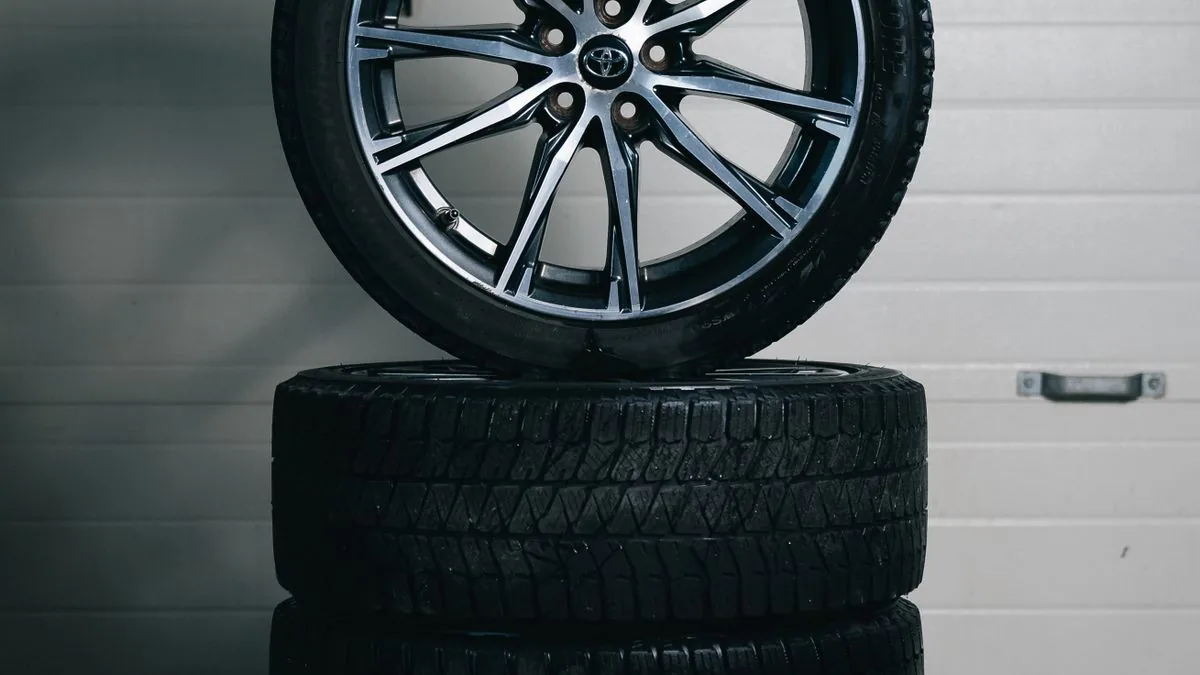
Run-flat tyres let you keep driving after a puncture, typically up to around 50 miles at no more than about 50mph, thanks to reinforced sidewalls that carry the car's weight with no air inside. Instead of pulling onto a hard shoulder on the North Circular to wrestle with a jack, you can drive on to somewhere safe or straight to a garage. The trade-offs are a firmer ride, higher replacement costs and very limited repairability, and your car needs a working tyre pressure monitoring system. This guide explains how they work, who genuinely benefits, and where the catches lie.
Key takeaways
- Run-flat tyres let you keep driving after a puncture, typically up to around 50 miles at a reduced speed of about 50mph.
- They work through reinforced sidewalls that support the car's weight even with zero air pressure.
- Downsides include a firmer ride, higher replacement costs, and very limited repairability.
- Your car must have a working tyre pressure monitoring system (TPMS) to run them safely.
- Mixing run-flats with standard tyres is not recommended, and once driven flat they usually need replacing.
What are run-flat tyres and how do they work?
Run-flat tyres are built to carry your car's weight even after losing all air pressure, letting you drive on for a limited distance rather than stopping at the roadside. The most common self-supporting design uses reinforced sidewalls, often strengthened with materials like Kevlar, that stay rigid when the air escapes.
The AA confirms that "run-flat tyres have reinforced sidewalls that are thicker and stiffer than normal tyres," made from reinforced materials that support vehicle weight even when deflated (AA: run-flat tyres). A less common support-ring system instead fits a hard ring around the wheel rim.
Because a deflated run-flat looks almost identical to a healthy one, drivers cannot always tell when something has gone wrong. That is exactly why these tyres must be paired with an electronic warning system, which we cover further below.
How far and how fast can you drive on a run-flat?
Most run-flat tyres let you keep driving for up to around 50 miles at a maximum of roughly 50mph after a puncture. This is an emergency window to reach a garage safely, not a licence to carry on your normal journey. Exceeding either limit risks the sidewall overheating and failing without warning.
Bridgestone states plainly that its run-flat tyres "let you keep driving after a loss of inflation pressure for up to 50 miles (80 km) at speeds up to 50 mph (80 km/h)" (Bridgestone: how run-flat tyres work). The AA gives the same guidance, noting most run-flats allow "up to 50 miles at around 50 mph, which should give you enough time to get to safety" (AA: run-flat tyres).
Exact figures vary slightly by manufacturer, so always check your handbook. Treat the numbers as a hard ceiling, and slow down further if you feel any change in handling.
What are the main pros of run-flat tyres?
The biggest advantage of run-flat tyres is safety after a sudden puncture. When a standard tyre blows at speed, the car can become unstable in an instant. A run-flat keeps its shape, so the vehicle stays more predictable and controllable, giving you time to slow down and steer to safety rather than reacting to a violent loss of grip.
Convenience matters too. You never need to change a wheel on a wet, exposed roadside, which is a genuine relief on routes like the A40. Many cars fitted with run-flats also skip the spare wheel entirely, freeing up boot space and shaving weight off the vehicle.
There is a knock-on benefit for everyday driving. Removing the spare and jack cuts weight, which can help marginally with fuel economy. For drivers who cover long distances alone or at night, that added peace of mind is often the deciding factor.
What are the downsides of run-flat tyres?
The most common complaint about run-flat tyres is ride comfort. Those reinforced sidewalls are stiffer than standard tyres, so they transmit more bumps and road noise into the cabin. On poorly surfaced London streets, that firmness is noticeable, especially on cars with limited suspension travel or larger wheels.
Cost is the second sticking point. Run-flats generally cost more to buy than equivalent standard tyres, and your choice of brands and patterns is narrower. Some drivers also report shorter tread life, partly because the rigid construction wears differently.
There is a hidden risk too. Because the tyre still looks normal when flat, you might unknowingly drive past the safe distance or speed and cause serious internal damage. Once a run-flat has been driven on while deflated, it usually cannot be reused, even if the puncture looks small.
Can run-flat tyres be repaired after a puncture?
In most cases, run-flat tyres should not be repaired once they have been driven on while flat. The RAC's position is that the answer is usually no, because the reinforced sidewalls and specialised construction "make it extremely difficult to perform a successful and safe repair" (RAC: run-flat tyres guide).
TyreSafe explains why: driving on a deflated run-flat subjects the structure to high stress that "can weaken and permanently damage it," and that damage may not be visible even to a trained specialist inspecting the tyre (TyreSafe: tyre repair and spares). There is no universal repair policy, so the manufacturer's guidance always comes first, and any repair must follow British Standard AU159.
If you are unsure whether your tyre can be saved, bring it to us. We will inspect the casing, check the manufacturer's position, and give you an honest recommendation rather than risk your safety on a compromised tyre.
Do run-flat tyres need TPMS?
Yes. A run-flat should only be fitted to a vehicle with a working tyre pressure monitoring system (TPMS). Because the tyre keeps its shape when flat, you cannot see or feel a puncture the way you would on a standard tyre, so the electronic warning is your only reliable alert that pressure has been lost.
Bridgestone is explicit that "all run flat tires, regardless of the specific system type, may only be used on a vehicle equipped with a Tire Pressure Monitoring System (TPMS)" (Bridgestone: how run-flat tyres work). In the UK this matters for roadworthiness too, as the RAC notes a working TPMS is checked at your annual MOT (RAC: run-flat tyres guide).
Without that system, you could drive miles on a ruined tyre before noticing, blowing straight past the safe limits and destroying the casing in the process.
Can you mix run-flat and standard tyres?
Mixing run-flats and standard tyres on the same car is strongly discouraged. The two constructions behave differently under load, braking, and cornering, which can upset the handling balance the manufacturer designed the car around. The safest approach is to keep all four wheels on the same type of tyre.
The RAC advises that if you are switching to run-flats, you should change all four tyres rather than mixing types, as doing otherwise "can have a negative impact on the handling of the vehicle" (RAC: run-flat tyres guide). If you move away from run-flats, remember most cars fitted with them carry no spare, so you will need a spare wheel or a sealant kit instead.
What does fitting run-flat tyres involve?
Fitting run-flat tyres needs specialist equipment and trained hands, because their rigid sidewalls are harder to mount than standard tyres. Forcing them on with the wrong machine can damage both the tyre and the wheel. A proper fit also depends on a working TPMS, since you cannot rely on a deflated run-flat looking flat.
Correct wheel alignment matters more with run-flats too. Their stiffer construction can mask the early signs of misalignment you would normally feel through a softer tyre, so uneven wear can creep up unnoticed. Having alignment checked when new tyres go on protects both your investment and your handling. At Park Royal Tyre & Alignment Centre in Park Royal, London NW10 7TR, we fit and balance run-flats to manufacturer spec and reset your TPMS before you leave.
You can explore options and book a fitting through our run-flat tyres page, or browse our full tyre range to compare alternatives before deciding.
Further reading: Summer vs Winter vs All-Season Tyres: Which Is Best? and When Should You Replace Your Tyres? Key Signs to Watch.
Frequently asked questions
How far can you drive on a run-flat tyre after a puncture?
Most run-flat tyres allow you to drive roughly 50 miles at a reduced speed of around 50mph after losing pressure. Exact limits vary by manufacturer, so check your handbook. Treat these figures as a maximum, not a target, and head straight to a garage rather than continuing your normal journey.
Will run-flat tyres fit any car?
No. Run-flat tyres are suited to vehicles designed for them, which means having a functioning tyre pressure monitoring system. Without that warning system, you may not notice a puncture until the tyre is already ruined, and your MOT can flag a faulty TPMS. If you are unsure whether your car is compatible, ask us before buying.
Are run-flat tyres more expensive than standard tyres?
Generally, yes. Run-flat tyres tend to cost more to buy than equivalent standard tyres, and the range of available sizes and brands is narrower. Some drivers also find they wear faster. Against that, you save on the cost and inconvenience of roadside breakdowns and a separate spare wheel.
Can a run-flat tyre be repaired?
Usually not, once it has been driven on while flat. The stress of running deflated can permanently weaken the internal structure, and that damage is often invisible from the outside. Manufacturer policies differ and any repair must meet British Standard AU159, so most garages recommend replacement as the safer choice.
Can I switch from run-flats to standard tyres?
Often you can, but only after weighing the trade-offs. You will need to carry a spare wheel or a sealant kit, since most cars with run-flats have neither. You should never mix run-flats and standard tyres on the same vehicle. We are happy to advise on the safest setup for your car.
Still weighing up whether run-flats are right for your vehicle? Our team will give you straight, jargon-free advice. Call us on 020 3886 2355, message us on WhatsApp at 07476 586 589, or book online here to arrange a fitting, a TPMS check, or a second opinion on a punctured tyre. New tyres start from £35, with walk-ins welcome and same-day fitting while you wait.
Find your tyre size
Your size is on the sidewall, for example 205/55 R16. Or look it up by car make.
Tyre Fitting near you
Prefer to get this sorted locally? Park Royal Tyre & Alignment Centre looks after drivers right across West and North-West London:
Same-Day Tyre Fitting & Walk-Ins Welcome
New tyres fitted from £35 while you wait, plus puncture repairs, wheel balancing and battery replacement at our Park Royal workshop. No appointment needed for tyres, just call in.