Two-Wheel vs Four-Wheel Alignment: Which Do You Need?


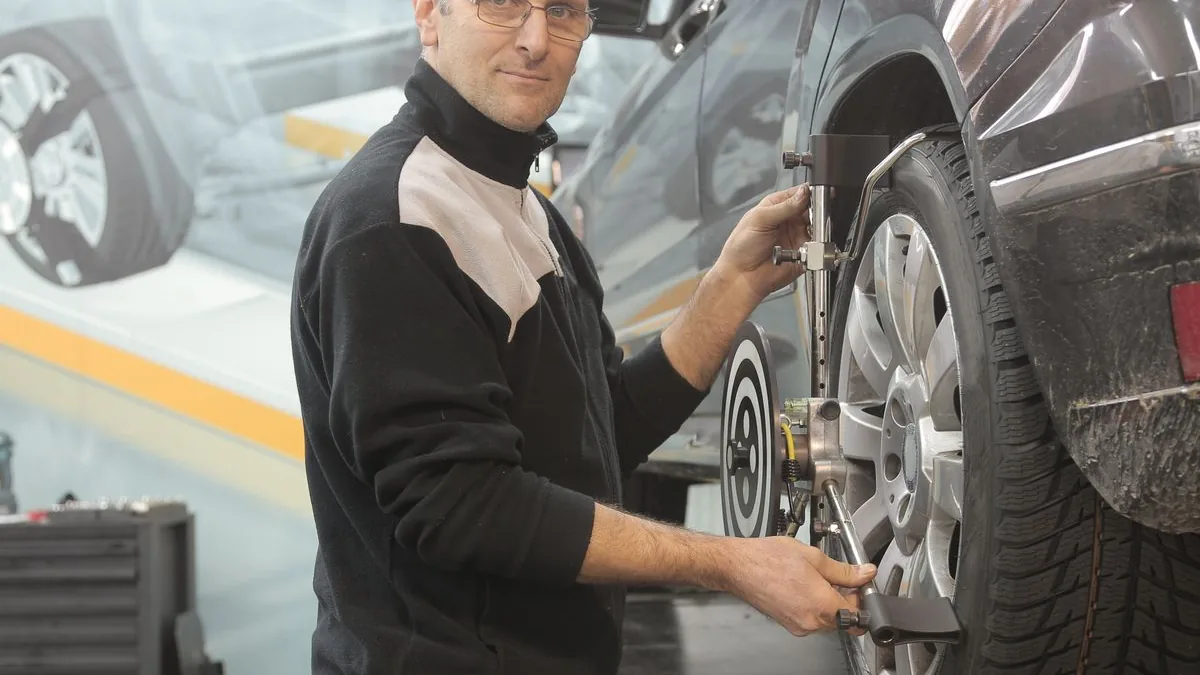
Most modern cars need four-wheel alignment. Any car with independent or adjustable rear suspension, which covers nearly every hatchback, saloon, estate, SUV and crossover built since the early 2000s, must have all four wheels measured together; two-wheel alignment only suits older vehicles with a fixed beam rear axle. If your steering wheel sits off-centre, your tyres wear unevenly or the car drifts on a straight road, alignment is usually the culprit. This guide explains the angles, the two service types, and how to choose with confidence.
The short answer: which alignment does your car need?
Most modern cars need four-wheel alignment. If your car has independent or adjustable rear suspension, which nearly every hatchback, saloon, estate, SUV and crossover built since the early 2000s does, all four wheels must be measured together. Two-wheel alignment only suits older vehicles with a fixed beam rear axle.
The reason is simple. Your front wheels can only be set correctly once the technician knows exactly where the rear wheels are pointing. Skip the rear measurement and any front adjustment is, at best, an educated guess. A rear toe reading that falls outside specification is, according to alignment equipment maker Pro-Align, a clear, visual reason to recommend a full four-wheel alignment rather than just adjusting the front.
What actually happens during wheel alignment?
Wheel alignment fine-tunes three suspension angles that decide how your tyres meet the road: camber, toe and caster. It does not touch the wheels themselves. Instead it adjusts the suspension so every tyre sits at the manufacturer's intended angle, keeping the car tracking straight, steering predictably and wearing its tread evenly.
Camber
Camber is the inward or outward tilt of the wheel when viewed from the front. Too much negative camber wears the inner edge of the tyre; too much positive camber wears the outer edge. Kerb strikes, potholes and worn suspension bushes are the usual reasons camber drifts out of specification.
Toe
Toe describes whether the wheels point slightly inward or outward, like your feet when you stand with heels together. Incorrect toe is the single most common cause of rapid, feathered tyre wear, and it is the angle adjusted most often during a routine alignment on both the front and rear axles.
Caster
Caster is the forward or backward tilt of the steering axis, viewed from the side. It governs straight-line stability and how the wheel returns to centre after a turn. Caster rarely shifts on its own and usually only moves after the car takes a heavy knock or suffers accident damage.
What is two-wheel or front alignment?
Two-wheel alignment, often called front alignment or simply tracking, adjusts only the front pair of wheels. The technician sets front toe and, where the design allows, front camber and caster. It is quicker and cheaper, but it assumes the rear wheels already point perfectly true, which is rarely a safe assumption on a modern car.
This service made complete sense on older vehicles with a solid rear axle, where the rear geometry was fixed by design and almost never moved. If you drive a classic, a kit car, or a basic panel van with a beam axle at the back, a quality front alignment may be all that is sensible or even possible to carry out.
The limitation is easy to spot. If the rear wheels sit slightly skewed, a front-only setup compensates by leaving your steering wheel off-centre. You end up with a car that tracks straight but a wheel that sits crooked, which is a dead giveaway that the rear was never measured in the first place.
What is four-wheel alignment?
Four-wheel alignment measures all four wheels against each other and against the vehicle's true centreline, then adjusts everything that can be adjusted. The system first establishes the rear thrust angle, the direction the rear axle actually points, then sets the front wheels to match it so the steering wheel finishes dead centre.
Even on cars where the rear geometry cannot be adjusted, measuring all four wheels still matters enormously. The rear readings tell the technician precisely how to set the front so the steering wheel sits straight and the tyres wear evenly. Without those rear figures, the front setup is essentially guesswork dressed up as a service.
A correct thrust angle is what stops a car from "dog-tracking", where it travels slightly crab-wise down the road with the body angled to the direction of travel. This is why most reputable workshops, ours included, treat four-wheel measurement as the default starting point. You can read our full process on our Hunter wheel alignment service page.
Which alignment does your car need?
Most modern cars need four-wheel alignment because they use independent or semi-independent rear suspension, where the rear geometry genuinely can and does move over time. Front-wheel-drive hatchbacks, saloons, estates, SUVs and crossovers almost all fall into this group, so a four-wheel check is the sensible and accurate choice.
When front-only may be enough
Older vehicles and some commercial vans with a fixed beam rear axle can be properly served by a front alignment, because the rear simply cannot be adjusted and rarely drifts. Even then, a quick rear measurement is worth doing to confirm nothing has shifted after a pothole, a kerb strike or a knock.
Symptoms that point to alignment
Watch for a car that pulls to one side, a steering wheel that sits off-centre on a straight, level road, uneven or feathered tyre wear, and vague, wandering handling. Any single one of these is worth a check, especially after you have hit a pothole or mounted a kerb hard.
Why is four-wheel alignment recommended for most modern cars?
Four-wheel alignment is recommended because it accounts for the whole vehicle, not just half of it. By referencing the rear thrust line first, the technician sets the front wheels correctly on the first attempt, avoiding the off-centre steering wheel and hidden misalignment that front-only work so often leaves behind.
There is a strong financial case too. Tyres are expensive, and correct geometry helps them wear evenly across the full width of the tread, so you replace them far less often. TyreSafe notes that misalignment can prematurely reduce a tyre's lifespan by up to 25%, which quickly outweighs the modest cost of a check.
The same TyreSafe guidance reports that correcting alignment can improve fuel efficiency by as much as 10%. In our experience, drivers who book a four-wheel check after fitting new tyres protect that investment far better than those who skip it. The small extra cost upfront usually pays for itself in longer tyre life and lower fuel bills.
What does poor alignment actually cost you?
Poor alignment costs you money in three ways: shorter tyre life, higher fuel consumption, and the risk of an MOT failure if uneven wear drops the tread below the legal limit. It also blunts steering response and braking stability, which matters most on wet or fast roads where you least want surprises.
The waste is far from rare. TyreSafe reports that more than 10 million cars, vans and motorcycles in the UK are being driven with at least one tyre that is dangerously worn, damaged or incorrectly inflated. Misalignment is one of the quiet reasons tyres reach that state long before they should.
On cost, the RAC estimates that UK drivers can expect to pay around £90 to have their front and rear tyres realigned, and it advises a check roughly every one to two years or every 10,000 miles. Set against a set of four tyres, that is cheap insurance for something you rely on every day.
What equipment does Park Royal use?
At our Park Royal workshop we use Hunter Hawk Eye camera alignment equipment (Hawk Eye is Hunter's own camera aligner) to measure each wheel against the manufacturer's specification with high precision. It photographs targets fitted to every wheel and calculate camber, toe, caster and thrust angle, then guide live adjustments until each reading sits comfortably within tolerance.
Camera-based measurement removes the guesswork and gives you a clear before-and-after printout. You can see exactly which angles were out, by how much, and where they finished. As an RAC and AA approved garage in Park Royal, London NW10 7TR, we measure first and explain what we find before touching a single bolt. Learn more on our Hawk-Eye wheel alignment page, or browse options on our tyres page with new tyres from £35.
Further reading: How Wheel Alignment Saves You Money on Tyres and Fuel and 6 Signs Your Car Needs a Wheel Alignment.
Frequently asked questions
How often should I get my alignment checked?
A check every one to two years, or every 10,000 miles, is sensible, plus any time you fit new tyres, hit a deep pothole or mount a kerb hard. If you notice pulling, uneven wear or an off-centre steering wheel, book a check sooner rather than waiting.
Does four-wheel alignment take longer than two-wheel?
Slightly. Measuring all four wheels adds a few minutes over a front-only setup, but on modern Hunter equipment the difference is small. That extra time delivers a genuinely accurate setup and a properly centred steering wheel, which is well worth it for the vast majority of drivers.
Can alignment fix tyre wear that has already happened?
Correct alignment stops any further uneven wear, but it cannot undo damage already ground into the tread. If a tyre is badly worn on one edge it may need replacing to stay legal and safe. Aligning afterwards then protects the new tyre from repeating the pattern.
Is two-wheel alignment ever the right choice?
Yes, on older vehicles or commercial vans with a fixed beam rear axle, where the rear geometry cannot be adjusted and rarely moves. For almost every modern car with independent rear suspension, four-wheel alignment is the correct and more accurate option to choose.
Will I feel a difference after alignment?
Usually yes. Drivers often report straighter tracking, a centred steering wheel and lighter, more predictable steering. If the car was pulling to one side before, that pull should disappear once every angle is measured and reset back within the manufacturer's specification.
Not sure which alignment your car needs? Bring it to Park Royal Tyre & Alignment Centre in Park Royal, London NW10 7TR. We measure first, explain what we find, then recommend only what is necessary. Call us on 020 3886 2355, message us on WhatsApp at 07476 586 589, or book online today. Prefer to ask a question first? Get in touch and we will be glad to help.
Hunter 4-Wheel Alignment near you
Prefer to get this sorted locally? Park Royal Tyre & Alignment Centre looks after drivers right across West and North-West London:
Same-Day Tyre Fitting & Walk-Ins Welcome
New tyres fitted from £35 while you wait, plus puncture repairs, wheel balancing and battery replacement at our Park Royal workshop. No appointment needed for tyres, just call in.