When to Change Your Brake Pads and Discs


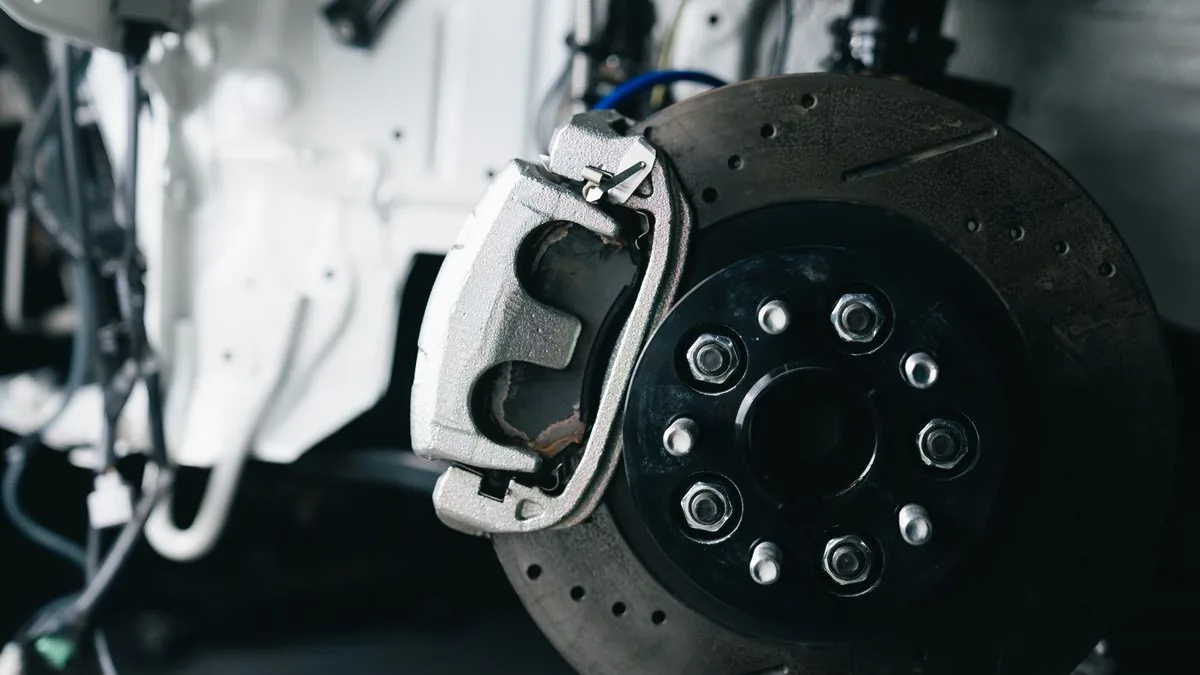
Change brake pads when the friction material wears to around 3mm, and change discs once they reach the minimum thickness stamped on the metal. Pads typically last 30,000 to 70,000 miles and discs longer, but measured thickness is the safe guide, not mileage — wear rates vary enormously between a motorway commute and London stop-start traffic. Most drivers only think about pads and discs when a warning light appears or a noise starts, by which point the choice is often already made for them.
Key takeaways
- Brake pads commonly last 30,000 to 70,000 miles, while discs usually last longer, roughly 50,000 to 70,000 miles, depending heavily on driving style.
- Replace pads at around 3mm of friction material; below 1.5mm is a Dangerous MOT defect.
- Discs carry a minimum thickness stamped on the metal, and must be replaced in axle pairs once worn past it.
- Squealing, grinding, vibration and longer stopping distances are the clearest warning signs.
- Stop-start London traffic, towing and harsh braking all shorten component life considerably.
When should you change brake pads and discs?
Change brake pads when the friction material wears to around 3mm, and change discs once they reach the minimum thickness stamped on the metal. Pads typically last 30,000 to 70,000 miles and discs longer, but the safest guide is measured thickness, not mileage, because wear rates vary enormously between drivers.
The RAC notes that brake pads can last anywhere between 30,000 and 70,000 miles, with drivers who brake hard, tow, or sit in stop-start traffic wearing them out fastest (RAC: brake pad replacement cost). Discs usually outlast pads, often surviving one to two sets before they need changing. Because that range is so wide, we recommend judging by remaining material and condition rather than the odometer alone.
What is the minimum brake pad thickness before replacement?
New pads start at roughly 10 to 12mm of friction material, and most garages advise replacement at around 3mm. Under the DVSA MOT rules, a pad worn to its wear indicator is a Major defect, and a pad worn below 1.5mm is classed as a Dangerous defect that fails the test outright.
The gov.uk MOT inspection manual is explicit: brake pads worn to the wear indicator are a Major defect, while pads worn below 1.5mm are a Dangerous defect (MOT inspection manual: brakes). In practice, never let pads reach that 1.5mm point. Booking a check with 3mm or so of material left keeps stopping distances safe and protects the discs. If you can glimpse the pad through the wheel spokes and it looks thin, arrange a brake pad and disc inspection promptly.
How do brake pads and discs wear out?
Brake pads and discs wear through friction, the same force that slows your car. Every time you press the pedal, the pads clamp against a spinning disc and shave away a little material. Pads are the softer, sacrificial part, so they wear faster, while discs thin out slowly over many thousands of braking cycles.
Heat plays a major role too. Repeated hard braking raises temperatures sharply, which can glaze pad surfaces and distort discs over time. That is why two identical cars can have very different brake life. A car driven mostly on motorways keeps its pads far longer than one battling stop-start traffic across West London, where the brakes work almost constantly.
What are the signs your brake pads need replacing?
The most reliable early warning is sound. Many pads carry a small metal wear indicator that produces a high-pitched squeal when material runs low. If that squeal turns into a harsh grinding noise, the friction material has likely worn away completely and metal is now scoring your discs, turning a routine job into a costly one.
Other signs matter too. A spongy or longer-travelling pedal, a brake warning light, or a car that pulls to one side under braking all point to pad trouble. You might also notice more brake dust on your wheels or a faint burning smell after heavy use. If the friction material looks thinner than about 3mm, book a check.
What are the signs your brake discs need replacing?
Discs usually warn you through feel rather than sound. The classic symptom is a pulsing or vibrating brake pedal, often felt through the steering wheel at higher speeds. This normally means the disc surface has become uneven or distorted, so the pads grip inconsistently as the disc rotates.
Look for more clues. Deep grooves, a pronounced lip around the disc edge, or blue heat marks all suggest wear or overheating, and a scraping noise that continues even with newer pads can mean the disc is damaged. Every disc has a minimum thickness stamped into the metal, and once it wears past that figure, replacement is the only safe option.
How do you check brake disc minimum thickness?
Every brake disc has its minimum thickness stamped onto the metal, usually marked "MIN TH" followed by a figure in millimetres on the disc edge or hub. A technician measures the disc with a vernier caliper at several points, and if the reading falls below that stamped value, the disc must be replaced.
Brembo, a leading disc manufacturer, confirms the wear limit is stamped on the disc as "MIN TH" and should be checked with a vernier caliper at a minimum of four points around the disc (Brembo: minimum brake disc thickness). Brembo also stresses that discs must be replaced on both sides even if only one has dropped below the minimum. Resurfacing is rarely worthwhile on modern thin discs, so worn discs are almost always changed as a pair.
Do you replace brake pads and discs together?
Not always, but often. If your pads are worn while the discs remain within their thickness limit and free of grooves or distortion, fitting new pads alone is perfectly acceptable. Garages frequently recommend doing both together when the discs show wear, because new pads bedding onto an uneven old disc cause noise, vibration and premature wear.
Balance matters across each axle. Brakes should always be replaced in axle pairs, both fronts or both rears together, never just one side, to keep braking even. Front brakes generally do more work and wear faster than rears. Our team will tell you honestly what needs doing now and what can safely wait, so you only pay for what you need.
What affects how fast brakes wear in London traffic?
Driving style is the biggest factor. Frequent hard braking, heavy traffic and short journeys all accelerate wear, while smooth, anticipatory driving extends pad and disc life. Vehicle weight adds to it, so larger SUVs, vans and cars towing trailers get through brakes noticeably quicker than a light hatchback on the same roads.
Environment and maintenance count too. Stop-start driving around Park Royal and the A40 is far harder on brakes than steady motorway miles, because the pads and discs barely cool between stops. Part quality matters, since budget pads wear faster and create more dust, and seized calipers or poor fitting cause uneven, premature wear that a routine service catches early.
What does it cost to replace brake pads and discs?
Cost depends on your vehicle, whether discs are needed alongside pads, and front versus rear. As a guide, the RAC puts replacing both front and rear pads at around £150 to more than £700, with new discs adding roughly £150 to £250 on smaller cars and more on larger vehicles.
Those RAC figures show why timing matters: catching worn pads early keeps you at the pad-only end of the scale, while letting them grind into the discs pushes you toward the higher combined cost (RAC: brake pad replacement cost). Other factors include performance or ceramic pad choices, the make and model, and whether calipers or sensors also need attention. A clear inspection first means no surprises.
What happens during a brake inspection?
A thorough brake inspection removes the guesswork. At Park Royal Tyre & Alignment Centre we measure remaining pad thickness, check disc thickness against the stamped minimum and inspect the surface, then examine calipers, flexible hoses and brake fluid, looking for leaks, corrosion and uneven wear that hint at deeper problems.
Then we explain what we find in plain language, so you know how much life is left and whether any work is needed now or can wait. Combining brakes with alignment and tyre checks under one roof lets us spot related issues, such as pulling caused by tracking rather than brakes. As an RAC and AA approved garage, we welcome walk-ins with no appointment needed and can often complete the work the same day.
Further reading: Warning Signs Your Suspension Needs Repair (2026 Guide) and Tyre Tread Depth: The UK Legal Limit and Why It Matters.
Frequently asked questions
How long do brake pads typically last?
The RAC says brake pads can last between 30,000 and 70,000 miles, though this is general guidance only. Real-world life depends heavily on driving style, vehicle weight and traffic. City drivers may need new pads sooner, while gentle motorway driving stretches them further. Measuring the remaining thickness is the only sure way to know.
What is the legal minimum brake pad thickness in the UK?
There is no single legal pad thickness, but the MOT rules make it clear when pads are unsafe. A pad worn to its wear indicator is a Major MOT defect, and a pad below 1.5mm is a Dangerous defect that fails the test. Most garages advise replacing pads at around 3mm to stay clear of that limit.
Can I drive with worn brake pads?
It is not safe to keep driving once pads are badly worn. Thin pads lengthen stopping distances and can damage your discs, turning a small repair into a costly one. A grinding noise usually means metal-on-metal contact, so arrange an inspection straight away rather than risking brake failure.
Why do my brakes squeal when they look fine?
Squealing does not always mean worn pads. It can be caused by brake dust, moisture after rain, glazed pad surfaces or a wear indicator just starting to touch the disc. Light morning squeals that clear quickly are often harmless. Persistent or loud squealing deserves a professional check to rule out genuine wear.
How often should brakes be checked?
We recommend having your brakes checked at least once a year, or at every service, whichever comes first. If you cover high mileage, tow regularly or drive mostly in traffic, check them more often. Any new noise, vibration or change in pedal feel is worth an immediate inspection.
Worried about a noise, vibration or longer stopping distance? Do not wait for a warning light. Call Park Royal Tyre & Alignment Centre on 020 3886 2355, message us on WhatsApp at 07476 586 589, or book a brake inspection online at our Park Royal, London NW10 7TR centre. We will check your pads, discs and calipers and give you honest advice on exactly what is needed.
Brake Pads and Discs near you
Prefer to get this sorted locally? Park Royal Tyre & Alignment Centre looks after drivers right across West and North-West London:
Same-Day Tyre Fitting & Walk-Ins Welcome
New tyres fitted from £35 while you wait, plus puncture repairs, wheel balancing and battery replacement at our Park Royal workshop. No appointment needed for tyres, just call in.