Common Exhaust Problems and What They Mean


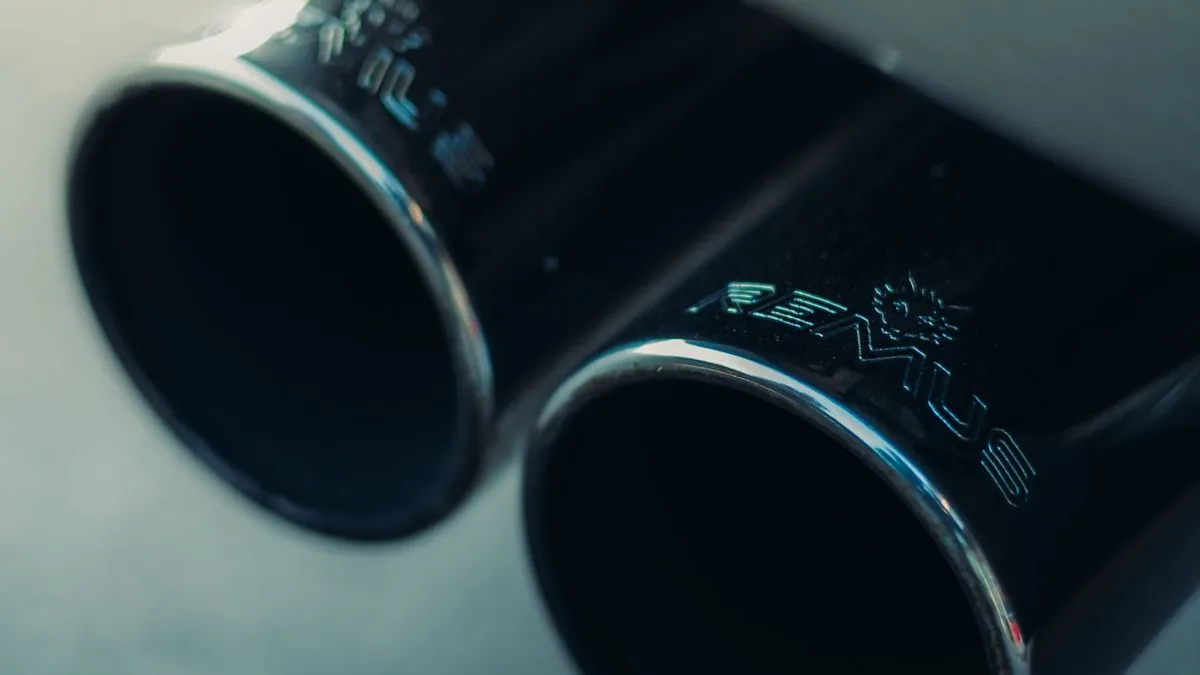
The most common exhaust problems are a louder or "blowing" note, rattling from underneath, a drop in power or fuel economy, the smell of fumes, a rotten-egg odour, and failed emissions at MOT. Each points to a different fault, and most are cheaper to fix early before the damage spreads along the system.
Below we walk through the symptoms drivers notice most, what each one usually means, and how a garage puts it right. If any of these sound familiar, our team at Park Royal can trace the fault and quote honestly before it becomes a bigger bill.
Why is my exhaust suddenly louder or "blowing"?
A sudden louder, raspy or droning note almost always means escaping gas: a hole, a split section, a cracked weld or a failed gasket at a joint. Because the gas is leaking before the silencer, the engine sounds much louder, and the leak tends to grow the longer you leave it.
A blow often starts as a pinhole and widens as corrosion and vibration work on it. Left alone, a small leak near a joint can spread until a whole section needs replacing. Catching it early usually means repairing or swapping just the affected part rather than the full system, which keeps the cost down.
It is also an MOT concern. The DVSA inspection manual fails a car for an exhaust leak that could affect emissions, and for exhaust noise clearly above what a standard silencer would produce (MOT inspection manual: emissions and nuisance). So a blow you can hear is very likely a blow that fails the test.
What causes exhaust rattles and knocking underneath?
A rattle that appears over bumps, at idle or under light acceleration usually means something has worked loose under the car. The two most common culprits are a corroded heat shield vibrating against the bodywork, and a perished rubber mounting that lets the exhaust knock against the underside.
Neither should be ignored. A loose heat shield is cheap to secure and often only rattles when cold, before the metal expands and quietens. A broken or split rubber mounting is more serious: it lets the whole system swing, which strains the joints and flexi-pipe and can turn a small job into a full-section replacement.
Under the MOT rules, any part of the noise suppression system that is insecure is a Major defect, and a part likely to become detached is classed as Dangerous (MOT inspection manual: emissions and nuisance). A dangling silencer is both an MOT failure and a road hazard, so a rattle is worth checking sooner rather than later.
Why has my car lost power or fuel economy?
If the car feels flat or your fuel economy has quietly worsened, the exhaust is a strong suspect. A partially blocked catalytic converter or a clogged diesel particulate filter restricts the flow of gas, so the engine has to work harder and burns more fuel. A leak ahead of the oxygen sensor can also upset the fuelling and waste fuel.
Because these symptoms overlap with ignition, fuelling and sensor faults, guessing gets expensive. A proper inspection with our diagnostic equipment confirms whether the exhaust, a sensor, or another system is behind the loss of performance, so you only pay to fix what is actually wrong.
What does a rotten-egg smell or exhaust fumes mean?
A rotten-egg, sulphur smell almost always points at the catalytic converter. The "cat" converts sulphur compounds during normal running, but when it is failing, overheating or being fed too much fuel by a running fault, that process breaks down and the smell escapes. It usually means the cat, or whatever is damaging it, needs attention.
Smelling ordinary exhaust fumes inside the cabin is different, and more urgent. A leak in the system, especially before or beneath the passenger compartment, can let gases escape where they should not. Exhaust contains carbon monoxide, which you cannot see or smell, so fumes you can smell are a warning to act.
If you notice fumes while driving with the windows up, get the car checked promptly. We will trace the leak and seal the system properly so the gases exit safely at the tailpipe, where they belong.
Catalytic converter faults and theft: what to know
A failed emissions test, an illuminated engine light, a rotten-egg smell or a hollow rattle from the cat can all point to a catalytic converter problem. The cat cleans up harmful gases, and when it is blocked, contaminated or physically breaking up inside, emissions rise, performance drops and the MOT result suffers.
What damages a catalytic converter
Cats rarely fail on their own. Misfires, burning oil, a rich-running engine or repeated cold short trips are the usual underlying causes, so we diagnose the root problem as well as the symptom. Fixing the cause first stops a replacement converter failing again soon after, which protects what is an expensive part.
Catalytic converter theft
Cats contain precious metals, which made them a target for thieves, though the picture has improved sharply. Across 30 UK police forces, thefts fell by an average of 98% in 2024 compared with 2021, dropping from 6,909 recorded thefts to just 150 (Auto Express: catalytic converter thefts). Even so, London saw some of the highest volumes at the peak, and detection stayed low: RAC analysis found only around 1% of catalytic converter thefts were solved by police (RAC: catalytic converter theft figures).
If your car suddenly roars and has no exhaust note to speak of, a stolen cat is a real possibility, particularly on hybrids and higher-riding models. We can supply and fit a replacement and add a marking or guard where one is available for your vehicle.
Lambda sensor and emissions faults
The lambda, or oxygen, sensor measures the oxygen left in the exhaust and tells the engine how to trim the fuel mixture. When it fails or reads slowly, the engine runs too rich or too lean. Typical signs are a lit engine light, rougher running, worse economy, and higher emissions at the tailpipe.
A faulty lambda sensor can also cook the catalytic converter over time by feeding it an incorrect mixture, so replacing a tired sensor early can save a far pricier cat later. Because the fault code often just says the mixture is wrong, we test the sensor and the surrounding system rather than fitting parts on guesswork.
Corrosion, age and MOT emissions failures
Corrosion is the leading cause of exhaust failure on UK roads. The system lives in heat, moisture, road salt and condensation, and cars used mainly for short journeys suffer most because the exhaust never fully dries out. Over time, sections rust through, joints weaken and mountings perish, which is why older systems eventually need repair.
Emissions failures often arrive alongside age and wear. At MOT, petrol cars fail for dense blue or clearly visible black smoke lasting five seconds at idle, and diesels fail for smoke likely to obscure other drivers (MOT inspection manual: emissions and nuisance). Diesel checks are getting stricter too: the DVSA has been trialling particle number (PN) testing to catch missing or damaged diesel particulate filters (DVSA Matters of Testing blog: particle number testing).
Catching corrosion early usually means replacing one section rather than the whole system. As an RAC and AA approved garage in Park Royal, we can inspect the full exhaust, advise what is still serviceable, and carry out an exhaust repair using quality, correct-fit parts.
Further reading: What's Included in a Full Car Service? and Interim vs Full vs Major Car Service: What's the Difference?.
Frequently asked questions
Can I drive with a blowing exhaust?
You can usually still drive short distances, but you should not leave it. A blow makes the car louder, can raise emissions and tends to grow as the hole widens. If you can smell fumes, or the noise is getting worse, have it checked promptly for safety and to avoid a larger repair. It is also very likely to fail your next MOT.
Do I need to replace the whole exhaust?
Often not. Many faults affect only one section, joint, sensor or mounting, so we can replace just that part rather than the entire system. We always inspect the full exhaust first and recommend the most cost-effective, lasting repair rather than defaulting to a full swap.
Why does my exhaust rattle only when cold?
A rattle that fades as the car warms up is usually a heat shield. The metal expands slightly with heat and stops vibrating once hot. Securing it is normally a quick, inexpensive fix, but it is worth confirming the noise is not a loose mounting or an early joint failure.
How much does exhaust theft or a new catalytic converter cost?
It depends heavily on the car, as cats are vehicle-specific and some contain far more precious metal than others. The best step is a quick inspection so we can confirm exactly what has gone and whether a genuine, aftermarket or type-approved part suits your vehicle and budget. We will always give a clear quote before any work.
Is a rotten-egg smell dangerous?
The smell itself signals a catalytic converter or fuelling fault rather than an immediate danger, but it should not be ignored, because the underlying cause can worsen and damage the cat. If you also smell ordinary exhaust fumes inside the cabin, treat that as urgent and get the car checked straight away.
Hearing a blow, a rattle, or smelling fumes anywhere across West London? Get it checked before it spreads. Call Park Royal Tyre & Alignment Centre on 020 3886 2355, message us on WhatsApp at 07476 586 589, or book an exhaust inspection online for an honest quote.
Exhaust Repair near you
Prefer to get this sorted locally? Park Royal Tyre & Alignment Centre looks after drivers right across West and North-West London:
Same-Day Tyre Fitting & Walk-Ins Welcome
New tyres fitted from £35 while you wait, plus puncture repairs, wheel balancing and battery replacement at our Park Royal workshop. No appointment needed for tyres, just call in.