The Right Tyre Pressure: How to Check It and Why It Matters


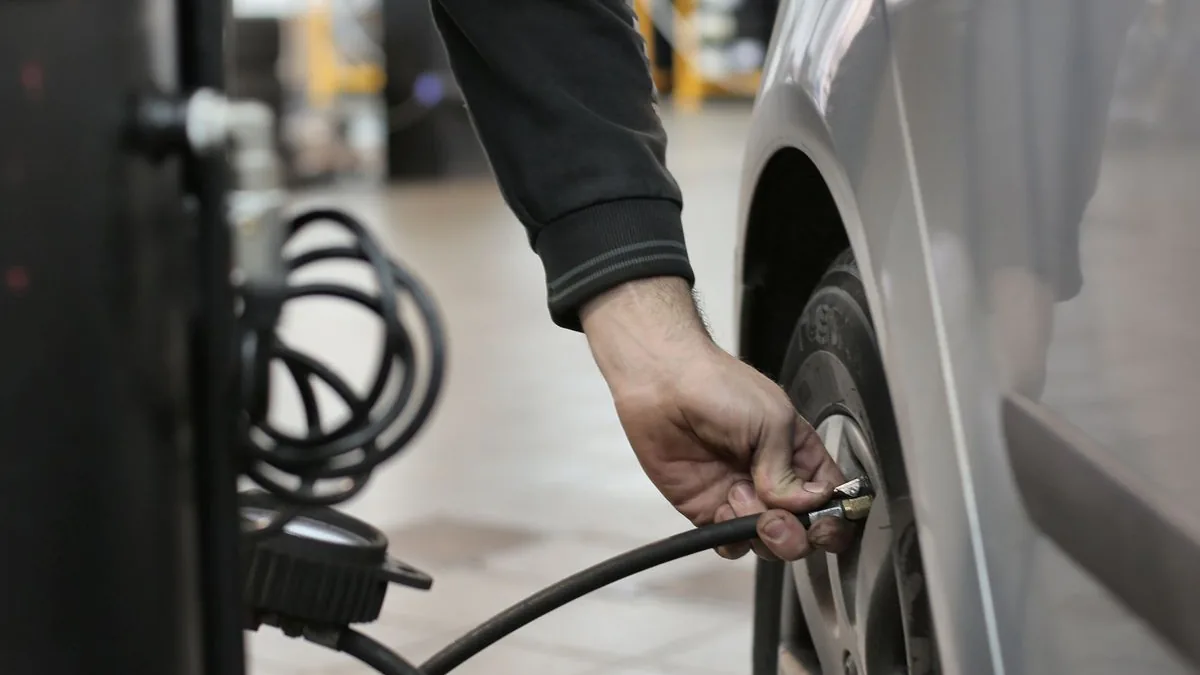
Your car's correct pressures come from the vehicle manufacturer, not the tyre maker, and they appear in three reliable places: a sticker on the driver's door sill, a label inside the fuel filler flap, or a table in your owner's handbook. Never copy the big number moulded into the tyre sidewall — that is the tyre's maximum, not your car's recommended figure. Check them cold, at least monthly, and use the laden figures when the car is loaded. Correct pressure is the cheapest safety and fuel saving available to any driver.
Here are the essentials at a glance:
- Always use the pressures your vehicle manufacturer specifies, never the maximum figure stamped on the tyre sidewall.
- Find your recommended pressures on the driver's door sill, inside the fuel filler flap, or in the owner's handbook.
- Check pressures cold, before you have driven more than a mile or two.
- Under-inflation wears the shoulders, wastes fuel and lengthens braking; over-inflation wears the centre and cuts grip.
- Check at least once a month and before any long trip.
Where do you find your car's correct tyre pressure?
Your car's correct pressures come from the vehicle manufacturer, not the tyre maker, and they appear in three reliable places: a sticker on the driver's door sill, a label inside the fuel filler flap, or a table in your owner's handbook. Never copy the big number moulded into the sidewall.
Start with the driver's door sill, the painted edge you see when the door is open. Many cars carry a small label there listing front and rear figures in PSI and bar, often with a separate column for a lightly or fully loaded vehicle. If nothing is fitted there, check inside the fuel filler flap, then the handbook, which always has a dedicated section. The sidewall figure is the tyre's maximum permitted pressure, not the pressure your particular car is designed to run, so treat it as a limit rather than a target.
Why must you check tyre pressure when the tyres are cold?
Air expands as it warms, so a tyre you have just driven on reads higher than the same tyre standing cold. Manufacturer figures are quoted cold, which the RAC defines as leaving three to four hours after driving so the tyres settle. Check then and your reading will be honest.
This catches people out on the forecourt. Roll in after a thirty-minute run and the heat in the tyres pushes the pressure up noticeably; adjust to the recommended figure in that warm state and you will actually be running under-inflated once everything cools. The RAC advises allowing your tyres several hours to cool before you check for an accurate reading (RAC: checking tyre pressure). If you can only check after a longer drive, top up at home first thing instead, when the tyres have had all night to settle.
How do you check and adjust your tyre pressure?
Checking pressure is straightforward with either a forecourt machine or a home gauge and small compressor. Unscrew the dust cap, press the gauge firmly and squarely onto the valve until the hissing stops, read the figure, then add or release air until it matches the manufacturer's number. Work through all four tyres in turn.
Do not forget the spare if your car carries one, since a flat spare is useless in an emergency, and space-savers often need a higher pressure marked on the wheel itself. Refit every dust cap afterwards to keep grit out of the valve core. Forecourt gauges drift out of calibration over time, so if a reading looks odd, try a second machine or have it confirmed properly. A quick professional check during any tyre visit removes the guesswork entirely and takes only minutes.
What does under-inflation do to safety, wear and fuel?
Under-inflation is the costly one because it attacks safety, tyre life and your fuel bill at the same time. A soft tyre flexes too much in the sidewall, builds heat, and wears heavily along both shoulders, while the RAC warns it also brings longer stopping distances and a higher risk of a sudden blowout at speed (RAC: checking tyre pressure).
This is not a rare problem. TyreSafe reports that more than half of the tyres on UK roads may be under-inflated, and that a 10 per cent drop in pressure can push fuel consumption up by around 2 per cent (TyreSafe: underinflation and fuel bills). The waste adds up: Michelin calculates that tyres running 14 psi (1 bar) below the correct pressure carry enough extra rolling resistance to burn roughly one full tank of fuel more every year (Michelin: finding the right tyre pressure).
That soft tyre also wears out sooner. Michelin notes that under-inflation causes premature wear in the shoulder area of the tread, so you replace tyres earlier and spend more, all while grip and steering feel worse than they should. Given how simple a fix it is, driving on under-inflated tyres is one of the easiest expenses on the road to avoid.
What are the effects of over-inflation?
Over-inflation causes the opposite failure. Pump a tyre too hard and it bulges in the middle, so only the central band of tread touches the road. That shrinks your contact patch, wears the centre prematurely and delivers a harsher, bouncier ride with less grip, especially on wet or broken surfaces where you most need it.
A rock-hard tyre also transmits every pothole and ridge into the cabin, which is uncomfortable and hard on your suspension over time. Braking and handling both suffer because there is less rubber gripping the tarmac. The lesson from both extremes is the same: the manufacturer's figure exists for a reason, and matching it exactly gives you the fullest contact patch, the most even wear and the safest, most predictable handling.
Do you need higher pressures for a heavy load?
Yes, and this is where that second column on the door label earns its keep. Many cars list a standard pressure for everyday driving and a higher one for when the vehicle is fully laden with passengers, luggage or a towed load. The extra weight compresses the tyres, so raising the pressure keeps them properly supported.
Picture a fully packed car heading off on holiday, or a van loaded for a job around West London. Sticking with the light-load figure under that weight effectively under-inflates the tyres, bringing all the heat, wear and fuel penalties described above. Set the higher figure before you set off, then drop back to the normal pressure once you have unloaded. Your handbook spells out which figure applies to which situation, so there is no need to guess.
How often should you check your tyre pressure?
A monthly check is the habit to build, plus a quick look before any long journey. Tyres lose air naturally even with no puncture: Michelin estimates a typical tyre sheds around 0.07 bar (about 1 psi) every month, so a tyre that was spot-on last month may already have crept down (Michelin: finding the right tyre pressure).
Pay extra attention as the seasons turn, because falling temperatures lower pressure too, which is why tyres often read low on cold winter mornings. If one tyre repeatedly drops faster than the rest, treat it as a warning sign of a slow puncture or a leaking valve rather than simply topping it up again. That is the moment to have it inspected, before a small leak turns into a roadside stop on the A40 or the North Circular. A regular routine catches slow losses before they hit your safety or your wallet.
Further reading: Tyre Tread Depth: The UK Legal Limit and Why It Matters and Run-Flat Tyres Explained: Pros, Cons and Who Needs Them.
Frequently asked questions
Can I use the pressure number printed on the tyre?
No. The figure moulded into the sidewall is the tyre's maximum permitted pressure, not the right pressure for your car. Always use the manufacturer's recommended figures from the door sill, fuel flap or handbook, as these are matched to your specific vehicle and how much weight it carries.
Is it safe to drive with slightly low tyre pressure?
A little low will not strand you, but it is not something to leave. Even mild under-inflation increases wear, raises fuel use and lengthens braking distances. Top up to the correct figure as soon as you can, and if a tyre keeps losing air, have it checked for a slow puncture or a faulty valve.
Does cold weather really change my tyre pressure?
Yes. Air contracts as it cools, so pressures naturally fall in colder weather and rise again as the tyres warm up. This is why tyres often read low on a frosty morning. Always set pressures cold, and check more often through winter so a genuine leak is not mistaken for a normal temperature change.
Should I check the pressure in my spare tyre?
Definitely. A spare is useless if it is flat when you need it most, so include it in your monthly check where the car carries one. Space-saver spares often require a noticeably higher pressure than the road tyres, so use the figure marked on the spare itself or listed in your handbook.
How much fuel can the wrong pressure really cost me?
More than most drivers expect. TyreSafe links a 10 per cent pressure drop to roughly a 2 per cent rise in fuel use, and Michelin puts tyres 14 psi low at about one extra tank of fuel a year. With more than half of UK tyres thought to be under-inflated, a two-minute check is one of the cheapest savings available.
Not sure your tyres are running at the right pressure? Do not leave it to guesswork. Pop into Park Royal Tyre & Alignment Centre in Park Royal, London NW10 7TR for a quick, honest pressure and condition check, or to sort a slow puncture with our tyre repair service. You can browse replacements from just £35 on our tyres page, and we offer same-day fitting while you wait, with walk-ins welcome and no appointment needed. Call 020 3886 2355, message us on WhatsApp at 07476 586 589, or book your visit here.
Need it done? See our TPMS Sensors service at the Park Royal workshop, or book online.
Find your tyre size
Your size is on the sidewall, for example 205/55 R16. Or look it up by car make.
Tyre Fitting near you
Prefer to get this sorted locally? Park Royal Tyre & Alignment Centre looks after drivers right across West and North-West London:
Same-Day Tyre Fitting & Walk-Ins Welcome
New tyres fitted from £35 while you wait, plus puncture repairs, wheel balancing and battery replacement at our Park Royal workshop. No appointment needed for tyres, just call in.