Puncture Repair vs Replacement: What's Safe and Legal


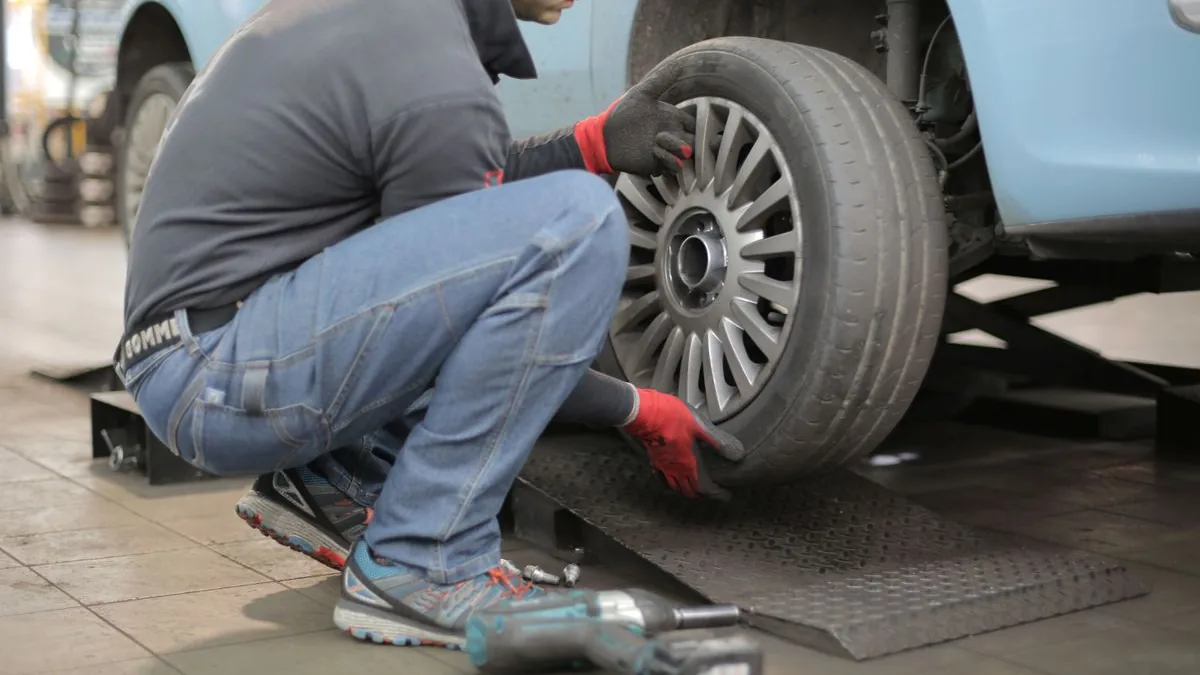
A flat tyre never arrives at a convenient moment, and the question that follows is always the same: can it be repaired, or does it need replacing? The honest answer depends on three things. Where the damage sits, how big it is, and whether the repair can be carried out to the recognised British Standard. Get it wrong and you risk a sudden blowout, an unroadworthy vehicle, and a fine. At Park Royal Tyre & Alignment Centre we inspect every puncture against these rules before we decide, and this guide explains exactly when a repair is safe and legal and when a new tyre is the only sensible choice.
Can a punctured tyre be repaired, or must it be replaced?
A puncture can usually be repaired only when it sits inside the central three-quarters of the tread, is smaller than 6mm across, and the tyre has not been driven on flat. Damage to the sidewall or shoulder, a hole larger than 6mm, or a tyre run while deflated all mean replacement rather than repair.
Everything comes down to structure. A tyre is a load-bearing safety component, and the strength that keeps it on the road lives in its steel belts and casing. A repair is only ever acceptable where it does not compromise that structure. If the damage falls outside the narrow band the British Standard allows, no patch or plug will restore the tyre to a safe condition, however small the hole looks from the outside.
Where on the tyre is the repairable minor repair area?
The repairable zone is the central three-quarters of the tread width, known as the minor repair area. Under British Standard BS AU 159, a puncture must fall inside this band to be fixed, and the hole must be no larger than 6mm in diameter. Anything outside those limits cannot be safely repaired.
TyreSafe, the UK tyre safety charity, confirms that tyre repairs can only be carried out on the central three-quarters of the tyre. This central band is reinforced with steel belts and sits relatively flat against the road, so a repair placed here is held under downward pressure that helps keep the seal tight. Most repairable punctures are simple: a nail, screw, or piece of debris driven straight down into the tread.
The 6mm limit matters just as much as the position. Under the British Standard for tyre repairs, BS AU 159, which TyreSafe's puncture repair guidance says every repair should follow, a car tyre with damage larger than 6mm across should not be repaired, because the casing has lost too much integrity. Tread depth counts too. If a tyre is already close to the 1.6mm legal minimum, repairing it makes little sense. You can read how we assess this on our tyre puncture repair page.
Why can't sidewall or shoulder punctures be repaired?
Sidewall and shoulder damage cannot be repaired because these areas flex constantly and carry the structural load of the tyre. The British Standard excludes them from the repairable zone. A patch bonded here has nothing solid to grip and will work loose under stress, risking a blowout at motorway speed.
The sidewall is the smooth area between the tread and the wheel rim. It contains no reinforcing tread blocks, so there is nothing rigid for a repair to bond against. Kwik Fit explains that the sidewall sustains the most load and endures the most flex, which means a patch applied there is far more likely to detach. The shoulder, where the tread curves down into the sidewall, is excluded for the same reason.
Being driven on while flat is another common disqualifier. When a tyre runs deflated, the sidewall is pinched between the wheel rim and the road, causing internal damage that often will not show clearly from the outside. Grey rubber dust or scuffing inside the casing is a giveaway. Kerb strikes, potholes, splits, and two punctures close together also rule out a repair. In these cases a fresh tyre is the only safe answer, and you can compare options across our tyre range.
What does a British Standard BS AU 159 repair involve?
BS AU 159 is the British Standard governing permanent car tyre repairs in the UK. It sets out where a repair may sit, the maximum hole size, and the method required. Crucially, it requires the tyre to be removed from the wheel so the inside can be fully inspected before any repair is approved.
Only an internal inspection reveals hidden casing damage, which is why a proper workshop repair is not the same as a roadside plug pushed in from the outside. We remove the object, measure the hole, check its position against the repairable zone, and examine the inner liner. If a fix is possible, we fit a combined patch-and-plug from inside. This seals the puncture channel and bonds to the airtight inner liner together, something an external plug alone cannot do reliably.
The standard also limits how many times a tyre may be repaired and forbids repairs that overlap or sit too close together. A roadside plug or an aerosol sealant is only ever a temporary measure to reach a garage, never a permanent fix. Once the tyre is off the wheel and inspected to the standard, a completed patch-plug repair is considered permanent and should last the remaining life of the tyre.
Can run-flat tyres be repaired after a puncture?
Run-flat tyres should usually be replaced rather than repaired. Because they let you keep driving while deflated, the reinforced sidewall can suffer hidden internal damage that no inspection reliably rules out. TyreSafe notes that several professional associations do not recommend repairing a run-flat tyre, and many manufacturers advise replacement.
The stiff sidewall that makes a run-flat useful is also its weakness after a puncture. Driving deflated, even within the recommended reduced speed, can quietly break down the internal structure. Once that happens the sidewall can no longer support the vehicle, and a patch will not restore it. The difficulty is that this damage often cannot be seen, so the safe assumption is that it has occurred.
We always check the manufacturer's guidance and inspect the casing before advising. A small central-tread puncture on a run-flat caught immediately, with proof it was not driven far while flat, may occasionally be repairable to standard. In most cases, though, replacement is the honest recommendation, and we will explain exactly why.
What does the law say about driving on a defective tyre?
Driving on a tyre that is defective, badly repaired, or below the legal tread limit is an offence. According to TyreSafe, penalties can reach up to £2,500 and 3 penalty points per tyre, and the legal minimum tread depth for car tyres is 1.6mm. Four illegal tyres could, in theory, mean a £10,000 fine and a licence-losing 12 points.
These figures come from TyreSafe's guidance on tyres and the law. A tyre repaired outside BS AU 159, or with damage in a non-repairable zone, counts as defective even if it currently holds air. That is why a proper inspection matters. It is not only about safety on the day, but about keeping your vehicle roadworthy and legal for the miles ahead. If in doubt, the safest and cheapest course is always a professional check.
What happens when you bring a puncture to Park Royal?
When you bring a punctured tyre to us, we remove it from the wheel and inspect both sides before quoting anything. This follows the British Standard and is the only reliable way to spot hidden damage. If a safe repair is possible we fit a permanent patch-plug; if it is not, we explain clearly why replacement is the safer call.
We would rather lose a small repair fee than send you out on a tyre we do not trust. New tyres start from £35 fitted, puncture repairs are carried out to the British Standard, and as an RAC and AA approved garage in Park Royal we hold ourselves to that benchmark on every job. Walk-ins are welcome and we carry out same-day repairs while you wait, no appointment needed, at our Park Royal workshop.
To talk it through or reserve a slot, book online, call 020 3886 2355, or message us on WhatsApp at 07476 586 589. We will give you a straight answer on whether your tyre can be saved.
Further reading: TPMS Sensors Explained: The Tyre Pressure Warning Light and Tyre Tread Depth: The UK Legal Limit and Why It Matters.
Frequently asked questions
Is it illegal to drive on a badly repaired tyre?
Yes. A tyre repaired outside BS AU 159, or with damage in a non-repairable zone, counts as defective. TyreSafe states this can carry up to £2,500 and 3 penalty points per tyre. A roadside plug or sealant is only a temporary measure to reach a garage safely.
How long does a proper puncture repair last?
A repair carried out to BS AU 159 with an internal patch-plug is considered permanent and should last the remaining life of the tyre. Because it bonds to the airtight inner liner as well as sealing the hole, it does not weaken over time the way an external-only plug can.
Can a tyre be repaired more than once?
A tyre can carry more than one repair, but only within the limits set by the British Standard, and never where repairs overlap or sit too close together. Each repair must still fall inside the central three-quarters. Several punctures usually mean it is time for a new tyre.
Can I repair a tyre I drove on while flat?
Usually no. Driving on a deflated tyre pinches the sidewall between the rim and the road, causing internal damage that often will not show from outside. Grey dust or scuffing on the inner liner confirms it. In most cases a tyre run while flat must be replaced rather than repaired.
Why does the tyre have to come off the wheel?
Removing the tyre is the only way to inspect the inner liner and casing for hidden damage. A puncture can look minor from outside while the inside shows the tyre was driven flat. BS AU 159 requires this internal check before any repair is approved, which is why external-only plugs are not permanent.
Puncture Repair near you
Prefer to get this sorted locally? Park Royal Tyre & Alignment Centre looks after drivers right across West and North-West London:
Same-Day Tyre Fitting & Walk-Ins Welcome
New tyres fitted from £35 while you wait, plus puncture repairs, wheel balancing and battery replacement at our Park Royal workshop. No appointment needed for tyres, just call in.