Tyre Tread Depth: The UK Legal Limit and Why It Matters


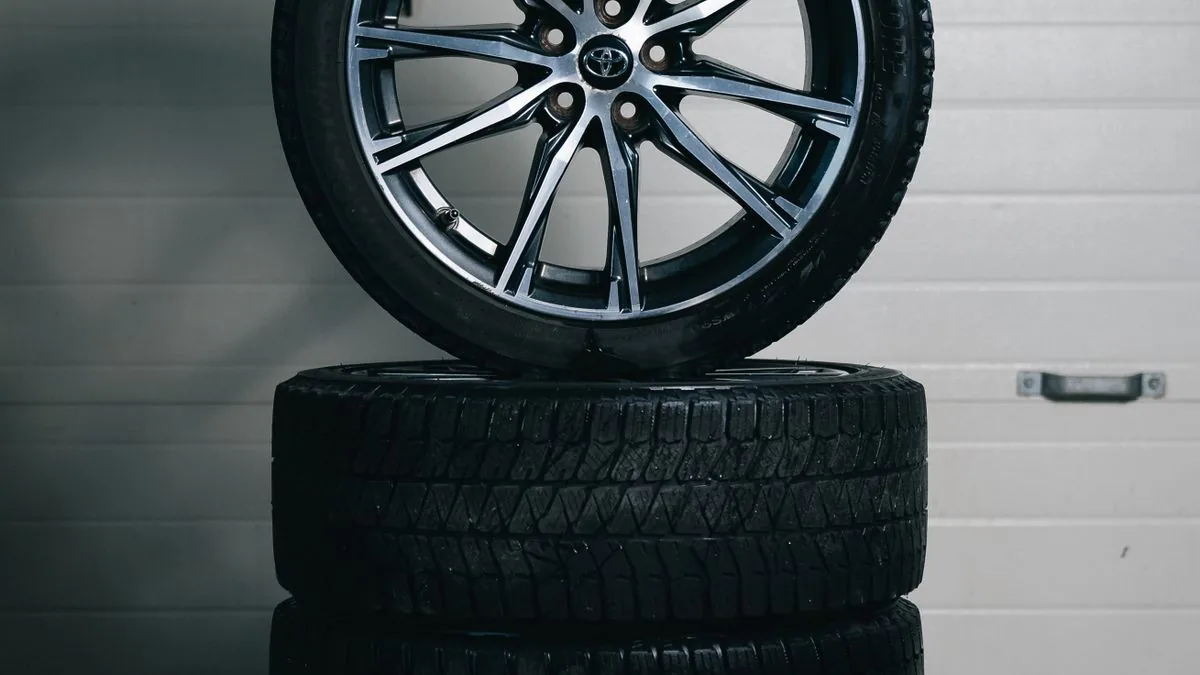
The UK legal minimum tread depth for cars is 1.6mm, measured across the central three-quarters of the tyre's width and around its entire circumference. Fall below that anywhere in the measured band and the tyre is illegal to use on the road, carrying a fine and penalty points per tyre. Most tyre and safety bodies recommend replacing at 3mm rather than waiting for 1.6mm, because wet braking falls away sharply below that. Your tyres are the only part of the car touching the road, and each contact patch is about the size of your hand.
Key takeaways:
- The UK minimum legal tread depth for cars is 1.6mm, measured across the central three-quarters of the tyre and around its entire circumference.
- Driving on illegal tyres can cost you a £2,500 fine and 3 penalty points per tyre, potentially £10,000 and 12 points across a full set.
- The 20p test is a quick at-home check: if the outer band of the coin is hidden, you're likely above the limit.
- Many tyre experts recommend replacing tyres at around 3mm, because wet braking distances stretch dramatically below that point.
What is the UK legal tread depth limit?
The legal minimum tread depth for cars in the UK is 1.6mm, and it must be maintained across the central three-quarters of the tyre's width and around its entire circumference (GOV.UK: check your tyres before travelling). Fall below that anywhere in the measured band and the tyre is illegal to use on the road.
Why does the measurement method matter? Because tyres rarely wear evenly. A tyre can look fine on the outer edges while the centre has worn smooth, or it might be perfectly legal in one spot and bald a quarter-turn later. Under-inflation, wheel misalignment and worn suspension all create patchy wear patterns. That's why a proper check looks at several points around and across each tyre, not just the first place you happen to glance.
The same 1.6mm figure applies to light vans and light trailers. It's also the pass or fail line at your MOT: a tyre below 1.6mm in the central three-quarters of the tread is an automatic MOT failure, so the limit isn't just about a roadside stop. It's a legal condition of keeping your car on the road at all.
How do you do the 20p test?
Take a 20 pence coin and slot it into the main grooves of your tyre. If the raised outer band around the edge of the coin disappears into the tread, your depth is likely above the legal limit. If you can still see that band, your tyres may be close to, or below, 1.6mm and need a closer look (RAC: checking tyre tread).
Repeat the check at several points across the width of each tyre and at a few places around the circumference. The outer band of a 20p coin sits roughly 3mm from the edge, so it's a slightly conservative gauge, which is exactly what you want for a first warning. It's not a precise measurement, though.
If the result looks borderline anywhere, treat it as a prompt to get the tyres measured properly with a tread depth gauge. A gauge gives you an exact figure in millimetres, so you can plan a replacement rather than discovering the problem the hard way. Do the check when the tyres are cold and you have good light, and don't forget the inner edges, which are the hardest to see and often wear first.
Why does tread depth matter so much in the wet?
Tread does one crucial job in the rain: it clears water so the rubber can still touch the road. In tests carried out by MIRA, cars with tyres worn to 1.6mm had braking distances up to 44% longer in the wet than those with 3mm of tread (TyreSafe: tread depth). That is a huge gap for a legal tyre.
As the tread wears down, the grooves get shallower and shift less water, so braking distances stretch and the risk of aquaplaning rises sharply on standing water. That 44% difference can translate into several extra car lengths in an emergency stop from motorway speeds, which is the distance between stopping safely and a collision.
This is the part many drivers underestimate. In the dry, a worn tyre might feel perfectly normal right up to the legal limit. It's in heavy rain, on a fast slip road or an emergency stop, that the difference between healthy tread and worn tread suddenly becomes obvious. By then it's too late to do anything but hope. Healthy tread is your insurance against the weather you can't control, and it works quietly in the background every time it rains.
What are the penalties for illegal tyres?
If you're stopped by police with tyres below the 1.6mm limit, you can face a fine of up to £2,500 and 3 penalty points per tyre (GOV.UK: check your tyres before travelling). That penalty applies to each illegal tyre, so a full set of four worn tyres could theoretically mean up to £10,000 in fines and 12 penalty points.
Twelve points is enough to trigger a driving ban for most motorists, so this is far more than a token fine. The penalties apply whether or not your MOT is in date, because a tyre can wear below the limit at any time between tests. Your insurance can also be affected: a defective tyre involved in an accident can give an insurer grounds to question a claim.
Tread wears down gradually, though. A tyre that was legal a few months ago can drop below the limit long before you'd otherwise notice, especially if you cover a lot of miles around West London's stop-start traffic. That's why your own regular checks matter so much. Don't rely on an occasional inspection alone to catch a worn tyre before the law, or the weather, catches you.
Why replace tyres early at around 3mm?
Many tyre experts recommend replacing tyres at around 3mm rather than waiting for 1.6mm, because wet grip and braking performance start to fall away noticeably as tread gets thin (TyreSafe: tread depth). The MIRA data on wet braking is the clearest evidence: most of the safety loss happens in the final couple of millimetres.
There's a practical angle too. Tyres don't wear at a steady pace, and the last couple of millimetres can disappear quickly. Replacing a little early means you're never caught out by a tyre that slips below the limit between checks. It also spreads the cost over time, since you're rarely forced to replace several tyres at once in a panic.
Think of 3mm as a sensible planning point, not a hard rule. If you're mostly driving short urban trips in the dry, you might comfortably run closer to the limit; if you regularly cover motorway miles in all weathers, acting at 3mm is the safer call. Either way, checking the figure rather than guessing puts you in control of the decision.
How do you get your tread depth checked?
The reliable way to know exactly where your tyres stand is a professional measurement with a calibrated gauge, taken across the width and around each tyre. A quick visual check at home is great for spotting obvious problems, but a proper inspection catches uneven wear, edge damage and slow punctures that a glance can miss. It only takes a few minutes.
At Park Royal Tyre & Alignment Centre in Park Royal, London NW10 7TR, we check tread depth as part of our routine tyre work, and we can advise honestly on whether you need new rubber now or can safely wait. As an RAC and AA approved centre, we measure every tyre properly rather than eyeballing it. If a tyre is worn, our tyre fitting and repair service covers everything from a single replacement to a full set, with new tyres from £35, and you can browse options on our tyres page.
Further reading: Puncture Repair vs Replacement: What's Safe and Legal and Wheel Balancing Explained: Why Your Steering Vibrates.
Frequently asked questions
What is the minimum legal tread depth in the UK?
For cars, the minimum legal tread depth is 1.6mm. It must be maintained across the central three-quarters of the tyre's width and around the tyre's entire circumference. Anything below that limit is illegal to use on the road and will fail an MOT.
Is the 20p test accurate?
The 20p test is a reliable quick check, not an exact measurement. If the coin's outer band is hidden inside the tread groove, your depth is likely above 1.6mm. If the band shows, get the tyre measured with a proper tread depth gauge to confirm the exact reading.
How much is the fine for illegal tyres?
You can be fined up to £2,500 and given 3 penalty points for each illegal tyre. Because it is charged per tyre, a full set of four worn tyres could mean up to £10,000 in fines and 12 points, which is enough to trigger a driving ban.
Should I really replace tyres at 3mm?
Replacing at around 3mm is widely recommended because wet braking and grip decline sharply before the 1.6mm legal limit, with braking distances up to 44% longer at 1.6mm. It gives you a safety margin and means you're less likely to be caught driving on a tyre that has dropped below the limit.
How often should I check my tyres?
A monthly visual check is a sensible habit, plus a look before any long journey. Watch for uneven wear, cuts, bulges and low tread across all four tyres. If anything looks borderline, book a professional inspection rather than putting it off.
Not sure where your tread stands? Don't leave it to guesswork. Pop into Park Royal Tyre & Alignment Centre in West London for a quick, honest tread check from an RAC and AA approved team, with same-day fitting while you wait and no appointment needed. Call us on 020 3886 2355, message us on WhatsApp at 07476 586 589, or book online here to secure a convenient time.
Find your tyre size
Your size is on the sidewall, for example 205/55 R16. Or look it up by car make.
Tyre Fitting near you
Prefer to get this sorted locally? Park Royal Tyre & Alignment Centre looks after drivers right across West and North-West London:
Same-Day Tyre Fitting & Walk-Ins Welcome
New tyres fitted from £35 while you wait, plus puncture repairs, wheel balancing and battery replacement at our Park Royal workshop. No appointment needed for tyres, just call in.