Wheel Alignment After Hitting a Pothole or Kerb


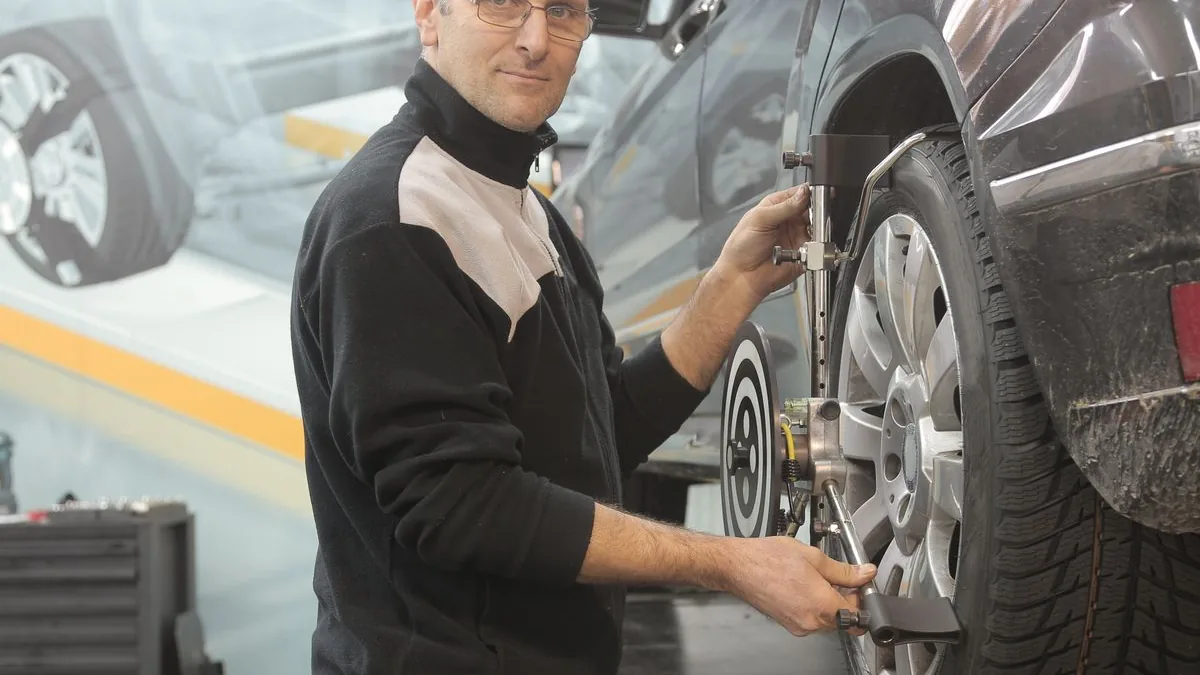
Yes, you should have your wheel alignment checked after hitting a pothole or kerb, even if the car still drives normally. A sharp impact can knock the wheel angles out of true in an instant, quietly damaging your tyres, steering and suspension over the following weeks.
Key takeaways
- A single hard pothole or kerb strike can shift your alignment instantly, often with no obvious symptoms at first.
- Impacts can bend wheels, split tyres internally and stress suspension joints as well as knocking out the angles.
- UK potholes are getting worse, and the RAC attends dozens of pothole-related breakdowns every single day.
- Watch for pulling, a crooked steering wheel, new vibrations or uneven tyre wear after a knock.
- A precision four-wheel alignment check after an impact protects your tyres and restores safe, predictable handling.
What does hitting a pothole do to your alignment?
A hard impact transfers a sudden, violent force through your tyre, wheel and suspension, and that force can shove the wheel angles out of their factory settings in a fraction of a second. Toe, camber and caster all rely on tight tolerances, so even a small shift changes how your car tracks down the road.
Think of alignment as the precise geometry that keeps all four tyres pointing exactly where they should. When you thump into a deep pothole, the suspension compresses hard and the steering components take a jolt they were never designed to absorb at that angle. The result is often a tiny change in toe or camber that you cannot see, but your tyres certainly feel it. Over the following miles, those misaligned wheels scrub against the tarmac instead of rolling cleanly, wearing away expensive rubber and dulling your steering response.
How bad is the pothole problem on UK and London roads?
It is worse than ever, and the numbers prove it. The RAC attended 26,048 pothole-related breakdowns across the UK in 2025, up 15% on the 22,703 recorded in 2024, which works out at an average of 71 pothole call-outs every single day. If you drive regularly, hitting a bad one is close to inevitable.
The underlying road condition explains why. The 2026 ALARM survey from the Asphalt Industry Alliance puts the carriageway repair backlog for local roads in England and Wales at a record £18.62 billion, which would take 12 years to clear (Asphalt Industry Alliance: ALARM survey). The RAC's figures on rising breakdowns tell the same story (Business Motoring: RAC pothole breakdown figures).
Here in West London the picture is no better. The RAC notes that areas with large urban centres such as London may see more potholes because of the heavier traffic their roads carry (RAC Pothole Index). The busy A-roads and side streets around Park Royal take a constant pounding from heavy traffic, so cracked, sunken and patched surfaces are a daily hazard for local drivers.
Can a kerb or pothole damage the wheel and tyre too?
Absolutely, and the damage often goes well beyond alignment. A sharp kerb strike or deep pothole can crack or buckle an alloy wheel, pinch the tyre against the rim and tear the internal structure, leaving a bulge in the sidewall that can fail without warning. These problems frequently travel together after a single bad knock.
Alloy wheels are stiff but brittle, so a hard enough hit can bend the rim or open a hairline crack that slowly leaks air. The tyre itself can suffer a pinch impact, where the casing cords break inside even though the outside looks fine. That weakened spot may balloon into a sidewall bulge days later. Because a bent wheel and a damaged tyre both upset handling and balance, it makes sense to inspect everything at once rather than chasing one symptom. If a tyre is beyond safe repair, our range of new tyres from £35 gets you rolling safely again.
How does a pothole affect your suspension and steering?
Your suspension absorbs the worst of any impact, which means it also takes the most punishment. A heavy knock can bend a track rod, split a rubber bush, damage a ball joint or even crack a coil spring, all of which throw your alignment out and make the car feel vague or unsettled afterwards. The RAC estimates that repairing pothole damage to a typical family car costs around £590 for anything more serious than a puncture (Business Motoring: RAC pothole breakdown figures).
The suspension and steering form one connected system, so damage in one place shows up elsewhere. A bent track rod, for example, changes your toe angle directly, while a worn or split bush lets components move further than they should. You might notice knocking over bumps, a steering wheel that no longer self-centres, or a car that wanders. Because these parts set your wheel angles, our suspension repairs service inspects them alongside any alignment work, since correcting the geometry on worn components rarely holds.
What signs should you check for after a knock?
Watch for four telltale signs in the days after an impact: a steady pull to one side, a steering wheel sitting off-centre when you drive straight, new vibrations through the wheel, and uneven wear creeping along one tyre edge. Any one of these suggests the knock shifted something underneath.
Here is the catch. You will not always feel the damage straight away. A faint pull or a slightly skewed steering wheel often appears a few days later as the affected parts settle. So even if your car seemed fine driving home, a quiet symptom can emerge by the end of the week. Run your hand across the tyre edges, listen for new knocks over bumps, and notice whether the steering still feels precise. If anything has changed, it is worth booking a check before uneven wear sets in for good and ruins an otherwise healthy set of tyres.
What do we inspect after an impact?
After a reported pothole or kerb strike, we carry out a full geometry and condition check rather than just resetting the angles. We measure toe, camber and caster on Hunter Hawk Eye camera equipment, then examine the wheels, tyres and suspension components for hidden damage that could undermine any adjustment.
Our process starts on the alignment rig, where the readings show exactly how far each angle has drifted from the manufacturer's specification. We also inspect the alloys for buckles and cracks, check tyres for sidewall bulges and internal damage, and assess the track rods, bushes and ball joints for play. This matters because adjusting alignment on a bent wheel or worn joint simply will not last. Our Hawk Eye wheel alignment service gives us an accurate, repeatable picture, and for four-wheel and more complex setups our Hunter wheel alignment equipment measures every corner so we fix the real cause, not just the symptom.
How do we put it right?
Once we know exactly what the impact has disturbed, we put it right in the correct order: repair or replace any damaged parts first, then set the alignment to the manufacturer's figures. Fixing the underlying damage before adjusting the angles is the only way to make the correction hold properly.
If a wheel is buckled or a tyre is internally damaged, we deal with that before touching the geometry, because resetting angles around a faulty component is wasted work. The same goes for a worn bush or bent track rod. With everything sound, we adjust toe, camber and caster back to spec on the alignment rig and recheck the figures. You drive away with the steering wheel centred, the pull gone and even tyre wear restored, often the same day. As an RAC and AA approved garage in Park Royal, we welcome walk-ins with no appointment needed and can usually check your car the same day if a pothole has left you worried.
Further reading: How Wheel Alignment Saves You Money on Tyres and Fuel and 6 Signs Your Car Needs a Wheel Alignment.
Frequently asked questions
Should I get an alignment check if the car drives fine after a pothole?
Yes. Impact damage does not always show up immediately, and a small shift in toe or camber can wear your tyres unevenly long before you notice a pull. A quick check after any notable knock catches the problem early, while it is still cheap to put right.
How soon after hitting a pothole should I book a check?
As soon as you reasonably can. If you feel an instant pull, a wobble or a loss of pressure, stop and have it looked at promptly for safety. Otherwise, book within a few days, since faint symptoms often emerge once the affected parts have settled.
Can a pothole really bend my alloy wheel?
It can. Alloy wheels are strong but brittle, so a deep pothole hit at speed can buckle the rim or open a hairline crack. A bent wheel often leaks air slowly and causes a vibration, so we always inspect the alloys after a reported impact.
Will alignment fix a vibration that started after the impact?
Sometimes, but not always. A vibration after a knock can come from a buckled wheel, a damaged tyre or a balance issue rather than alignment alone. We check all of these together, because identifying the true source is the only way to cure the vibration properly.
Can I claim pothole damage back from the council?
You can try, but success is far from guaranteed, as many councils reject the majority of claims. Photograph the pothole, note the location and keep your repair invoice. Either way, get the damage fixed promptly for safety rather than waiting on a claim.
Hit a pothole or clipped a kerb recently? Do not wait for a quiet niggle to ruin a set of tyres. The team at Park Royal Tyre & Alignment Centre in Park Royal, London NW10 7TR is RAC and AA approved, and can check your alignment, wheels and suspension on camera alignment equipment, often the same day. Call us on 020 3886 2355, message us on WhatsApp at 07476 586 589, or book your check online today.
Wheel Alignment near you
Prefer to get this sorted locally? Park Royal Tyre & Alignment Centre looks after drivers right across West and North-West London:
Same-Day Tyre Fitting & Walk-Ins Welcome
New tyres fitted from £35 while you wait, plus puncture repairs, wheel balancing and battery replacement at our Park Royal workshop. No appointment needed for tyres, just call in.