Wheel Balancing Explained: Why Your Steering Vibrates


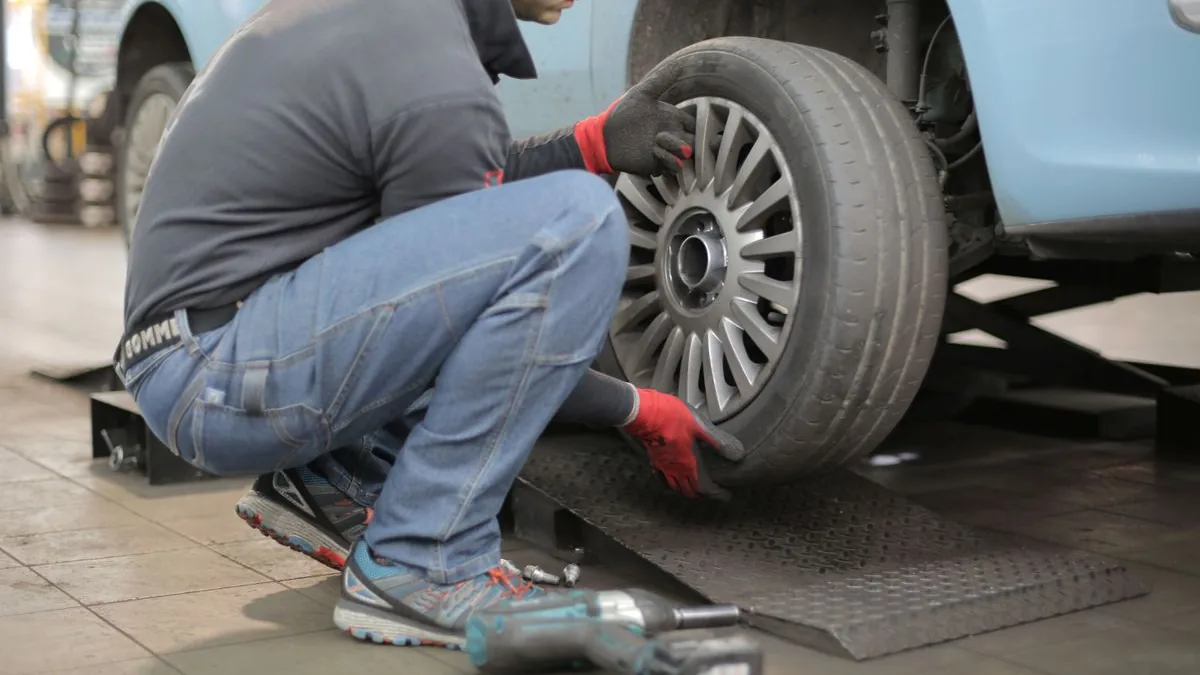
That steady tremor through your steering wheel at motorway speed is rarely your imagination. More often than not it points to wheels that have lost their balance. Wheel balancing corrects the tiny weight differences around each tyre and rim so the assembly spins smoothly, killing the vibration you feel through the wheel and seat. Get it right and the steering settles, the ride calms down, and your tyres wear evenly. Here at Park Royal Tyre & Alignment Centre in NW10 we balance wheels every day, so let us explain exactly what is happening, how balancing differs from alignment, and when you actually need it.
What is wheel balancing?
Wheel balancing is the process of distributing weight evenly around a wheel-and-tyre assembly so it rotates smoothly at speed. No tyre and rim are ever perfectly uniform. Small variations in material and manufacturing leave heavier spots that, when the wheel spins fast, throw it off centre and set up a vibration you can feel through the car.
A technician mounts each wheel on a spin balancer, which measures those imbalances precisely, then clips or sticks small lead-free weights to the rim to counteract them. There are two kinds of imbalance to correct. Static imbalance is a single heavy point that makes the wheel hop up and down. Dynamic imbalance sits to one side of the wheel's centreline and causes a side-to-side wobble. A modern balancer detects both at once and tells the technician exactly where and how much weight to add. The aim is simple: a wheel that spins true with no vibration.
What are the signs you need wheel balancing?
The clearest sign is a vibration that grows with speed, usually most noticeable between 40 and 50mph and sometimes easing slightly above that. You feel it shaking through the steering wheel, the seat, or the floor. Where you feel it tells you which end of the car is affected, which helps the technician go straight to the problem.
According to the RAC, vibration felt through the steering wheel is usually caused by front wheel imbalance, while a wobble through the seat or floor points to a rear wheel issue (RAC: unbalanced wheels). Beyond the shaking, watch for uneven or patchy tyre wear where flat spots or cupping appear across the tread. If a balance weight has flicked off the rim the change can arrive suddenly rather than creeping up on you. Caught early, a quick rebalance stops the problem before it spreads and can be handled alongside our tyre fitting and repair service.
Why do unbalanced wheels cost you money?
Ignoring an imbalance is a false economy because the vibration does not just annoy you, it quietly wears out expensive parts. A wheel that is even slightly out of balance hammers the same components thousands of times a minute, and that constant loading shortens the life of your tyres, bearings and suspension joints well before their time.
The RAC lists three clear consequences of driving on unbalanced wheels: uneven tyre wear caused by uneven pressure across the contact patch, stress on the suspension system that can lead to premature failure of a component, and reduced fuel efficiency because the wheels raise rolling resistance and make the engine work harder (RAC: unbalanced wheels). In other words, a balancing job that takes a few minutes per wheel can save you from buying tyres early, replacing bearings, or burning extra fuel. It is one of the cheapest pieces of preventative maintenance a car needs.
Wheel balancing vs wheel alignment: what is the difference?
This is the question we field most often, so let us settle it clearly. Balancing deals with weight distribution around each individual wheel and cures vibration. Alignment adjusts the angles at which all four wheels sit relative to the road and each other, and it cures pulling, crooked steering and uneven wear. They are separate jobs that fix separate faults.
Continental confirms the distinction plainly: tyre balance is entirely different to wheel alignment, though the two are sometimes confused, because aligning wheels means adjusting their angles so they sit parallel to each other and perpendicular to the ground (Continental: balancing tyres). A handy way to remember it: balancing stops the shake, alignment stops the pull. If your steering trembles at speed you need balancing. If the car drifts to one side on a flat road, or the steering wheel sits off-centre when you are travelling straight, you need alignment. Many cars benefit from both at once, especially after new tyres. Our precision Hawk Eye wheel alignment handles the geometry side, while balancing is done on the tyre machine.
How does the wheel balancing process work?
Balancing is quick but precise. The technician removes each wheel and mounts it on a computerised spin balancer, a machine that rotates the assembly at speed while sensors measure how the weight is distributed. The machine pinpoints the heavy spots and shows exactly where weights are needed and how heavy each one should be. It is a measured job, not guesswork.
Continental describes modern dynamic balancing as spinning the wheel on a computer balancer that measures it across all axes, with small clip-on or adhesive weights then added to both the inner and outer sides of the wheel rim to cancel the imbalance (Continental: balancing tyres). Which weight type is used depends on the wheel design: clip-on weights hook onto the rim flange, while adhesive weights sit hidden on the inner barrel of an alloy. Once the weights are fitted the wheel is spun again to confirm the reading drops to zero, then it is refitted and torqued to the manufacturer's setting. Each wheel is balanced individually, and the whole job usually takes only a few minutes per wheel once the tyre is off the car.
When do your wheels need balancing?
The most common trigger by far is fitting new tyres. Every fresh tyre should be balanced as it goes on, because the new rubber and rim combination will have its own heavy spots that need correcting from day one. Goodyear states that balancing is strongly recommended as something you need to do before fitting new tyres to your vehicle, which is why most reputable fitters include it as part of supplying and fitting (Goodyear: do new tyres need balancing?).
The second big trigger is impact. Clout a kerb, drop hard into a pothole, or take a speed bump too fast, and you can dislodge a balance weight or knock the wheel out of true in an instant. If vibration appears suddenly after a knock, balancing is the first thing to check. There is no fixed service interval to rely on: Goodyear notes there is no set mileage guidance, and instead advises rebalancing when you rotate tyres, buy new ones or have a puncture repaired, or whenever you notice vibration or uneven tread wear (Goodyear: do new tyres need balancing?). Browse our tyre range if you are due a fresh set, with new tyres fitted and balanced from £35.
Further reading: Tyre Tread Depth: The UK Legal Limit and Why It Matters and When Should You Replace Your Tyres? Key Signs to Watch.
Frequently asked questions
How long does wheel balancing take?
For a standard car, balancing all four wheels typically takes around 30 to 45 minutes, depending on whether the tyres are already off the car. The balancing on the machine is fast; most of the time goes on removing, refitting and torquing the wheels correctly. We always give you a realistic timing when you book.
Can I drive with unbalanced wheels?
You can drive short distances, but it is unwise for long. Persistent vibration accelerates tyre wear, stresses wheel bearings and suspension joints, and makes the car tiring to drive at speed. The longer you leave it, the more likely the imbalance leads to costlier repairs. If the shaking is severe, get it checked promptly.
Does balancing fix a steering pull?
No. A car that pulls to one side, or has an off-centre steering wheel when you drive straight, almost always needs alignment rather than balancing. Balancing only cures vibration. If you have both a shake and a pull you likely need both jobs done, so we diagnose which you need before any work begins.
How often should wheels be balanced?
There is no fixed interval. Balancing with every new set of tyres, after any kerb or pothole impact, and whenever vibration appears covers almost every situation. Some drivers also have it checked when rotating tyres. If your car feels smooth at all speeds, your wheels are almost certainly balanced correctly.
Is wheel balancing included when I buy tyres?
At Park Royal Tyre & Alignment Centre it is part of the job. Every new tyre we fit is balanced on the machine before it goes back on the car, because a fresh tyre and rim always need it. You should never be charged separately for balancing a tyre we have just supplied and fitted.
Feeling a vibration through the wheel, or not sure whether it is balancing or alignment you need? Pop into Park Royal Tyre & Alignment Centre in Park Royal, London NW10 7TR, call us on 020 3886 2355, or message us on WhatsApp at 07476 586 589. You can also book online and we will fit you in for a quick check.
Need it done? See our Wheel Balancing service at the Park Royal workshop, or book online.
Find your tyre size
Your size is on the sidewall, for example 205/55 R16. Or look it up by car make.
Puncture Repair near you
Prefer to get this sorted locally? Park Royal Tyre & Alignment Centre looks after drivers right across West and North-West London:
Same-Day Tyre Fitting & Walk-Ins Welcome
New tyres fitted from £35 while you wait, plus puncture repairs, wheel balancing and battery replacement at our Park Royal workshop. No appointment needed for tyres, just call in.