When Should You Replace Your Tyres? Key Signs to Watch


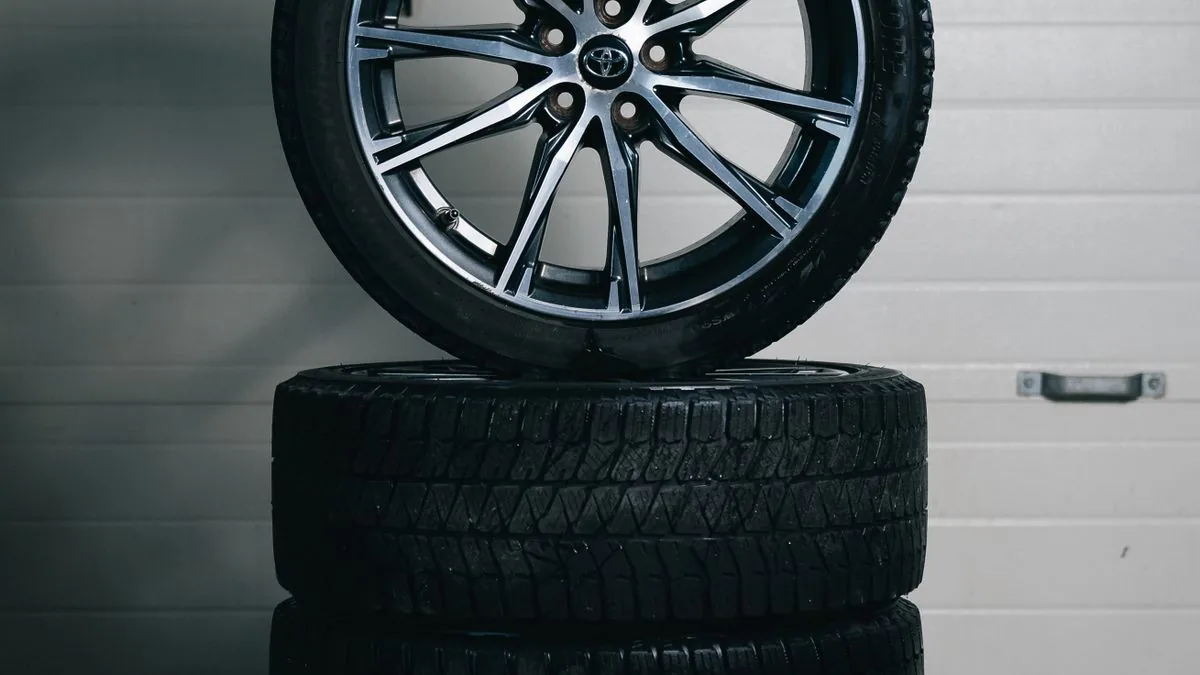
Replace your tyres when the tread wears low, the rubber ages or cracks, damage appears, or wear turns uneven. The UK legal minimum is 1.6mm across the central three-quarters, but many experts fit fresh rubber at around 3mm for safer wet braking. This guide walks through every warning sign so you know exactly when it is time.
How worn does tread have to be before you replace a tyre?
Replace a tyre as it nears 3mm, well before the 1.6mm UK legal minimum. At 1.6mm a tyre is illegal and clears far less water from the road, so wet braking distances stretch. Fitting fresh rubber around 3mm keeps a sensible safety margin between your routine checks.
Legal does not mean safe. Independent MIRA testing cited by TyreSafe found that cars with tyres worn to 1.6mm had up to 44% longer braking distances in the wet than the same cars on 3mm tread (TyreSafe: tread depth checks). That is a car length or more at motorway speed, which is why the gap between borderline and dangerous is so small.
There is a legal sting too. Drive on a tyre below 1.6mm and you risk a fine of £2,500 and three penalty points for every illegal tyre, so all four could cost you £10,000 and your licence (RAC: checking tyre tread). A quick 20p test gives a rough home reading, but a tread gauge across several points tells the real story. Browse fresh rubber on our tyres page if a check shows you are running low.
Does tyre age and cracking mean it is time for new tyres?
Yes. Tyres age out even with plenty of tread left, because rubber hardens over the years and loses the suppleness it needs to grip. Continental advises that any tyre more than ten years old should be replaced, and most manufacturers suggest annual inspections once a tyre passes five years.
Continental states plainly that all tyres, including the spare, that are more than ten years old should be removed from service and replaced, even if they look usable and the tread has not reached the legal minimum (Continental: when to replace tyres). Ageing happens whether a car is driven hard or barely moves, which is why a spare that has sat untouched for a decade is rarely roadworthy.
The rules are strict enough that older rubber is banned outright in some settings. Since 1 February 2021, tyres over ten years old cannot legally be fitted to the front steered axles of buses and coaches, or to any single wheels on a minibus (GOV.UK: ban on old tyres for buses and lorries). It signals how seriously safety bodies now treat tyre age, not just tread.
How to read the tyre age date code
You can find the manufacture date on the sidewall in the four-digit DOT code. The first two digits are the week of the year and the last two are the year, so 2419 means the twenty-fourth week of 2019. Look also for crazing along the sidewall and at the base of the grooves. Those fine splits, often called perishing, show the compound is breaking down and raise the risk of a sudden failure on a hot motorway run or under a heavy load.
What does uneven tyre wear tell you?
Uneven wear is one of the clearest signals that something needs attention beyond the tyre itself. When one edge wears faster than the other, or the centre balds while the shoulders look fresh, the cause is usually wheel alignment or incorrect pressures. Replacing the tyre alone will not fix it.
Worn outer edges often point to under-inflation, while a worn centre band suggests over-inflation. Wear concentrated on one shoulder typically means the alignment is out, perhaps after a kerb knock or a pothole, and West London roads around Park Royal serve up plenty of both. Feathered or scalloped edges can hint at tired suspension parts that need looking at.
Why fixing the cause matters
If you fit new rubber without correcting the underlying problem, the fresh tyres simply wear out the same way and your money disappears twice. Sorting alignment and pressures first protects your investment and keeps the car tracking straight. Our team can check both when you visit, so you are not throwing cash at a symptom while the real fault carries on chewing through tread.
Should vibration or bulges prompt a tyre replacement?
Vibration through the steering wheel and visible bulges are both serious warnings that usually mean replacement, not repair. A bulge in the sidewall signals internal damage, typically from hitting a kerb or pothole, where the casing has been compromised. That tyre can blow out without warning and should be changed promptly.
Vibration has several causes. It might be a simple wheel-balancing issue, but it can also flag a tyre deforming internally or wearing unevenly. A steady wobble that grows with speed should never be ignored, because left alone it stresses your suspension and steering components as well as the tyre. The longer it runs, the wider the eventual repair bill spreads.
The tricky part is that sidewall damage is rarely repairable, even when the tread looks perfect. Safe repairs are restricted to the central tread area and kept within strict limits, so a damaged sidewall almost always means a new tyre. When you are unsure, have it inspected rather than guessing and hoping it holds.
Do repeated punctures mean you need a new tyre?
Repeated punctures, or a single puncture in the wrong place, frequently end in replacement rather than another patch. A small nail in the central tread can often be repaired safely. But damage near the shoulder or sidewall, or several existing repairs, usually rules out fixing the tyre one more time.
There are firm rules about where and how often a tyre can be mended, set out in the British Standard for tyre repairs. A repair must sit within the central portion of the tread, and a tyre carrying too many patches is not considered safe to mend further. Driving on a flat or badly under-inflated tyre can also wreck the internal structure, taking repair off the table entirely.
If you keep collecting punctures, it is worth a proper assessment rather than another quick plug. Our tyre repair service will tell you honestly whether a safe fix is possible or whether replacement is the smarter, safer call for the miles ahead.
Can mismatched tyres force an early replacement?
Mismatched tyres can compromise handling enough to justify replacing them as a pair or a set. Fitting different brands, tread patterns or wear levels across an axle changes how each corner grips and brakes. The car may pull to one side, feel unsettled in the wet, or respond unpredictably in an emergency stop.
For the best balance, fit matching tyres in pairs across the same axle at minimum. On many cars, putting the newer, deeper-tread pair on the rear helps stability when braking on wet roads. Large differences in tread depth between front and back can also unsettle how the car behaves through corners and under hard braking.
If you have topped up with an odd tyre after a puncture, it is worth reviewing the whole set. Matching your rubber properly is a small step that pays off every time the weather turns, and it is easy to sort during a routine visit before winter arrives.
Further reading: Wheel Balancing Explained: Why Your Steering Vibrates and Tyre Tread Depth: The UK Legal Limit and Why It Matters.
Frequently asked questions
How often should I check my tyres?
A monthly visual check is a sensible habit, plus a look before any long trip. Inspect tread depth, pressures, and the sidewalls for cracks or bulges. If anything looks borderline, book a professional inspection rather than waiting for it to become a bigger, more expensive problem down the line.
Is 1.6mm safe or just legal?
1.6mm is the legal minimum, not a safety target. Wet braking and grip decline well before that point, with up to 44% longer stopping distances at 1.6mm versus 3mm (TyreSafe: tread depth checks). Acting around 3mm gives you a useful margin and avoids being caught below the limit.
Can I just replace one tyre?
Sometimes, but it depends on the others. If the remaining tyres have plenty of even tread and match reasonably, a single replacement can be fine. Where there is a big tread or type difference across an axle, replacing in pairs keeps handling balanced and predictable in an emergency stop.
How long do tyres last?
It varies with driving style, mileage and conditions, so there is no single figure. Tread wear and age both matter: a low-mileage tyre can still age out as the rubber hardens and cracks. Manufacturers advise replacing any tyre over ten years old regardless of tread (Continental: when to replace tyres).
Where do I find my tyre's age?
Check the four-digit DOT code moulded into the sidewall. The first two digits are the week and the last two are the year of manufacture, so 3620 means week 36 of 2020. If the numbers are worn away or you are unsure, our fitters can read it and advise during any check.
Not sure whether your tyres need replacing? Do not leave it to guesswork. Pop into Park Royal Tyre & Alignment Centre in Park Royal, London NW10 7TR for an honest check from an RAC and AA approved team, with a new tyre fitted from £35 and same-day fitting while you wait, walk-ins welcome with no appointment needed. Call 020 3886 2355, message us on WhatsApp at 07476 586 589, or book your visit online.
Find your tyre size
Your size is on the sidewall, for example 205/55 R16. Or look it up by car make.
Tyre Fitting near you
Prefer to get this sorted locally? Park Royal Tyre & Alignment Centre looks after drivers right across West and North-West London:
Same-Day Tyre Fitting & Walk-Ins Welcome
New tyres fitted from £35 while you wait, plus puncture repairs, wheel balancing and battery replacement at our Park Royal workshop. No appointment needed for tyres, just call in.